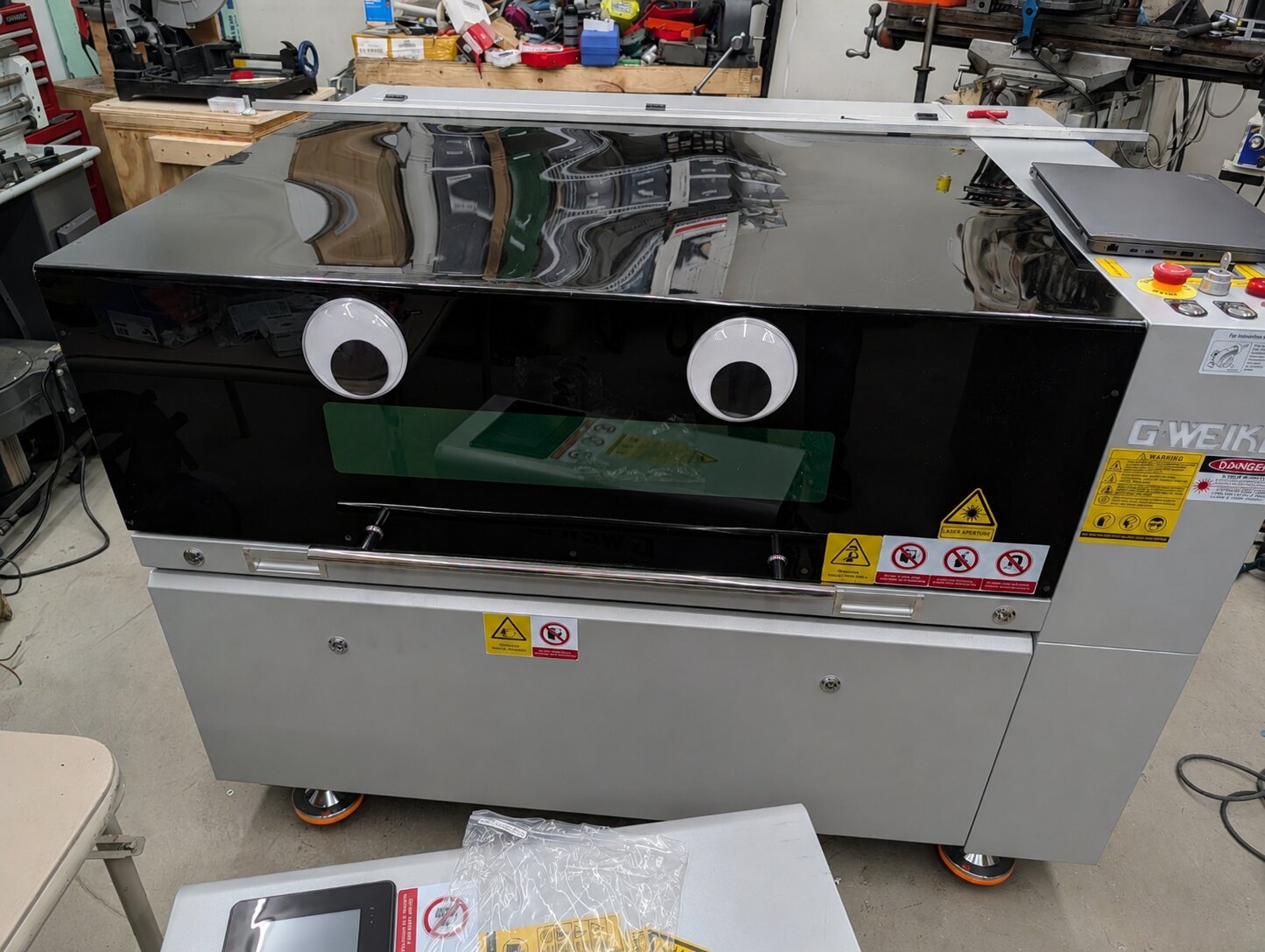
I bought a new laser, the Gweike M3. It came in a crate, and the only way to its final room in the basement was under a low deck, down a ramp, and through a wall.
June 1, 2026: the laser had arrived, and now the hard part. It's a 1200W CNC fiber laser cutter, engraver, welder and cleaner, plus a 80W CO2 laser, in one machine. The shipping weight is 1000 pounds (450 kg). My initial reaction: "OMG, it's huge."
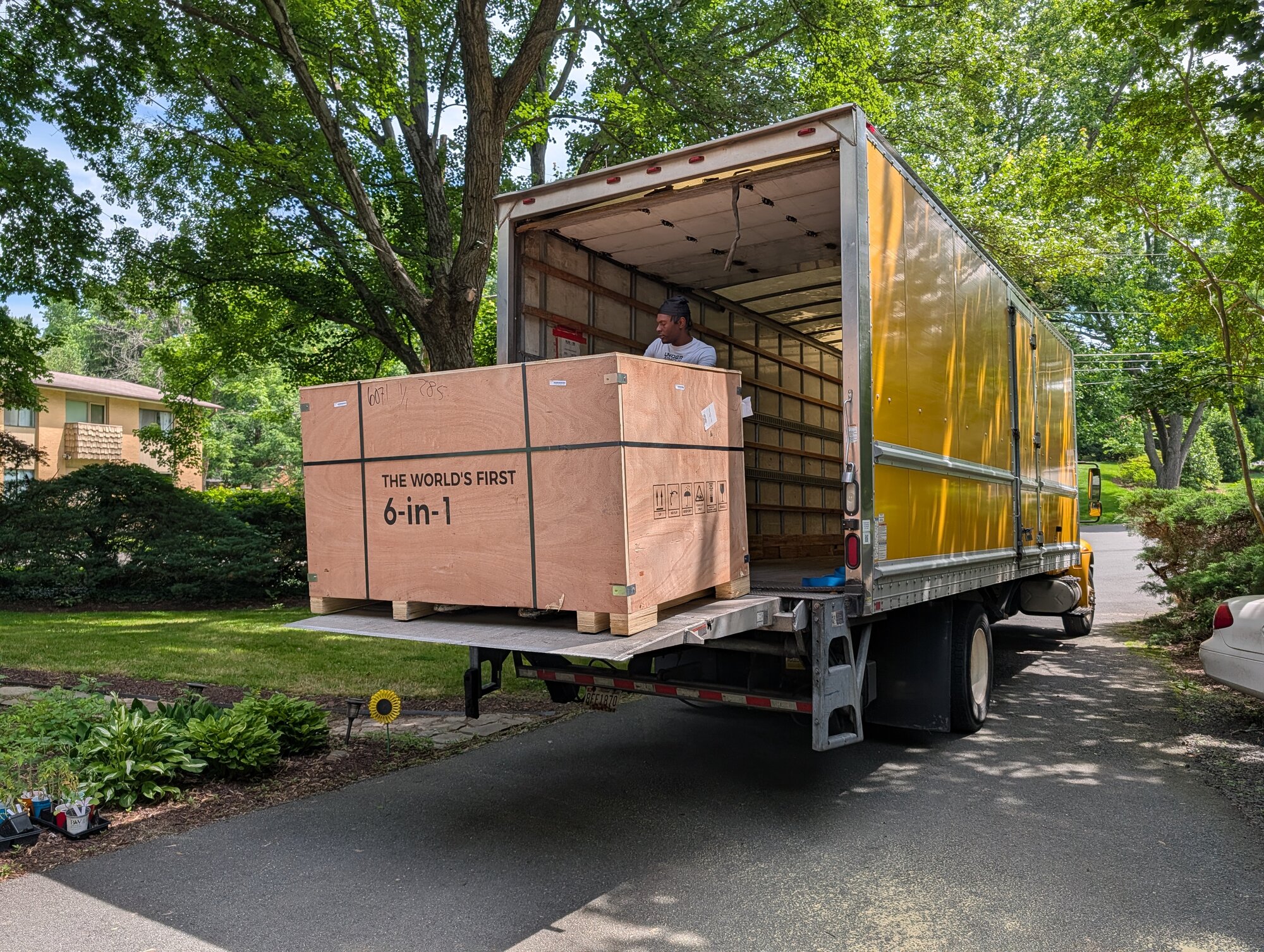
It came off a box truck on the liftgate. The crate proclaims it "The World's First 6-in-1."
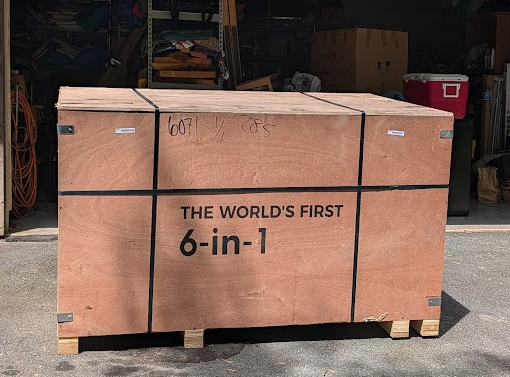
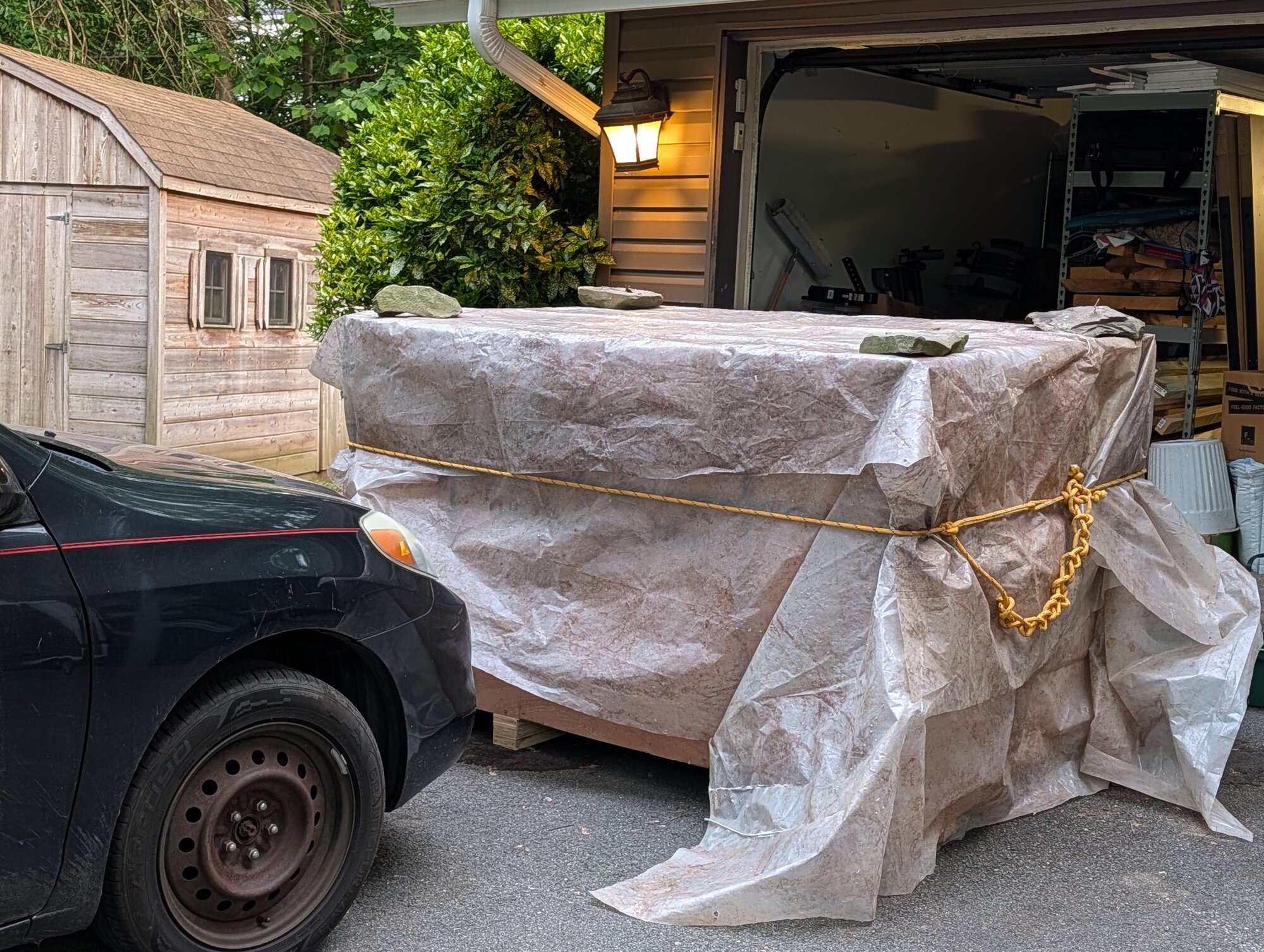
It spent its first night in the driveway under a tarp.
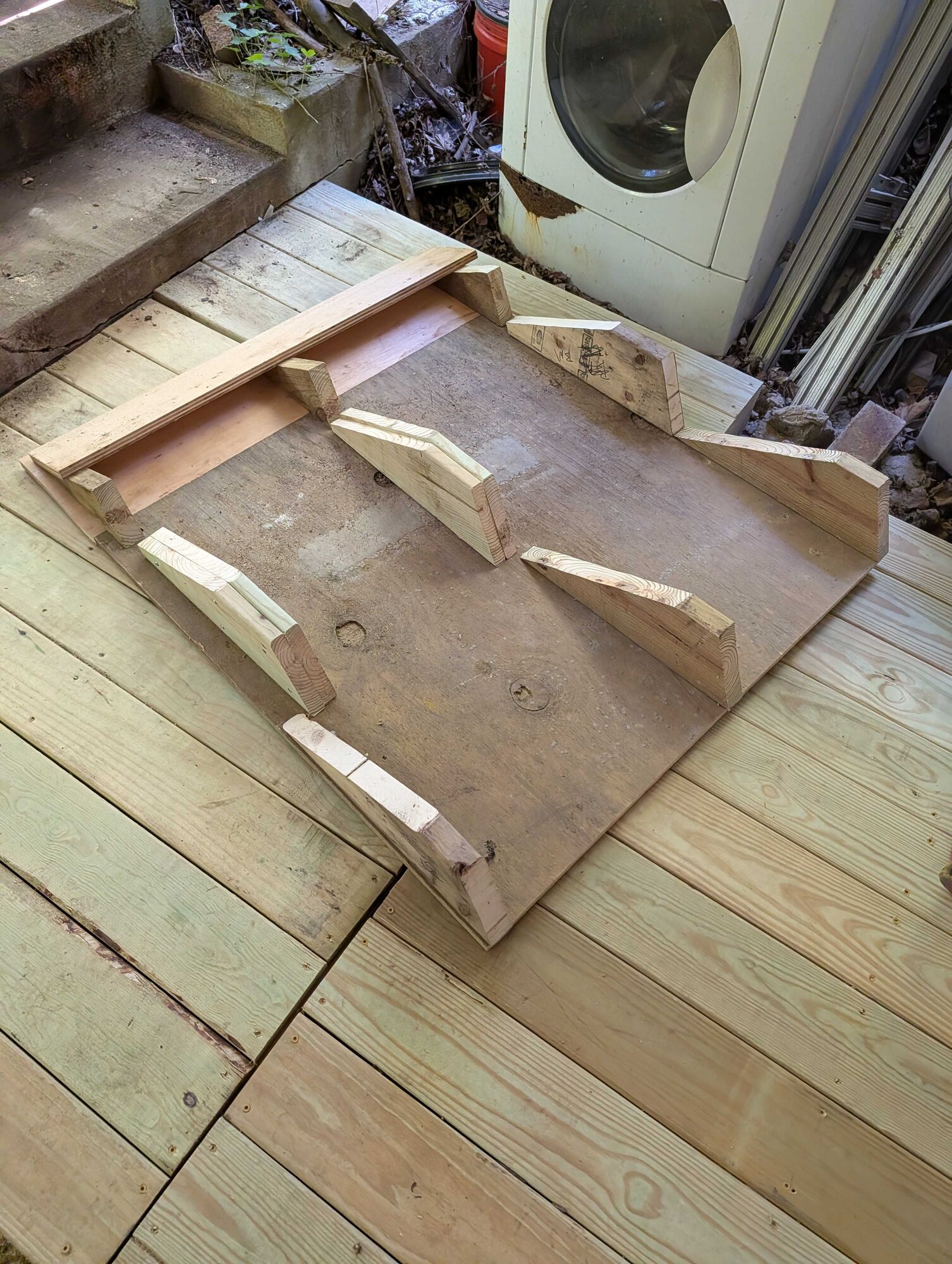
I spent two days preparing the path in. I modeled the area under the deck in CAD to make sure I could clear the low overhead, and it looked like I'd just barely make it. I built a ramp, since the stairs are one of the harder parts of getting stuff into the shop.
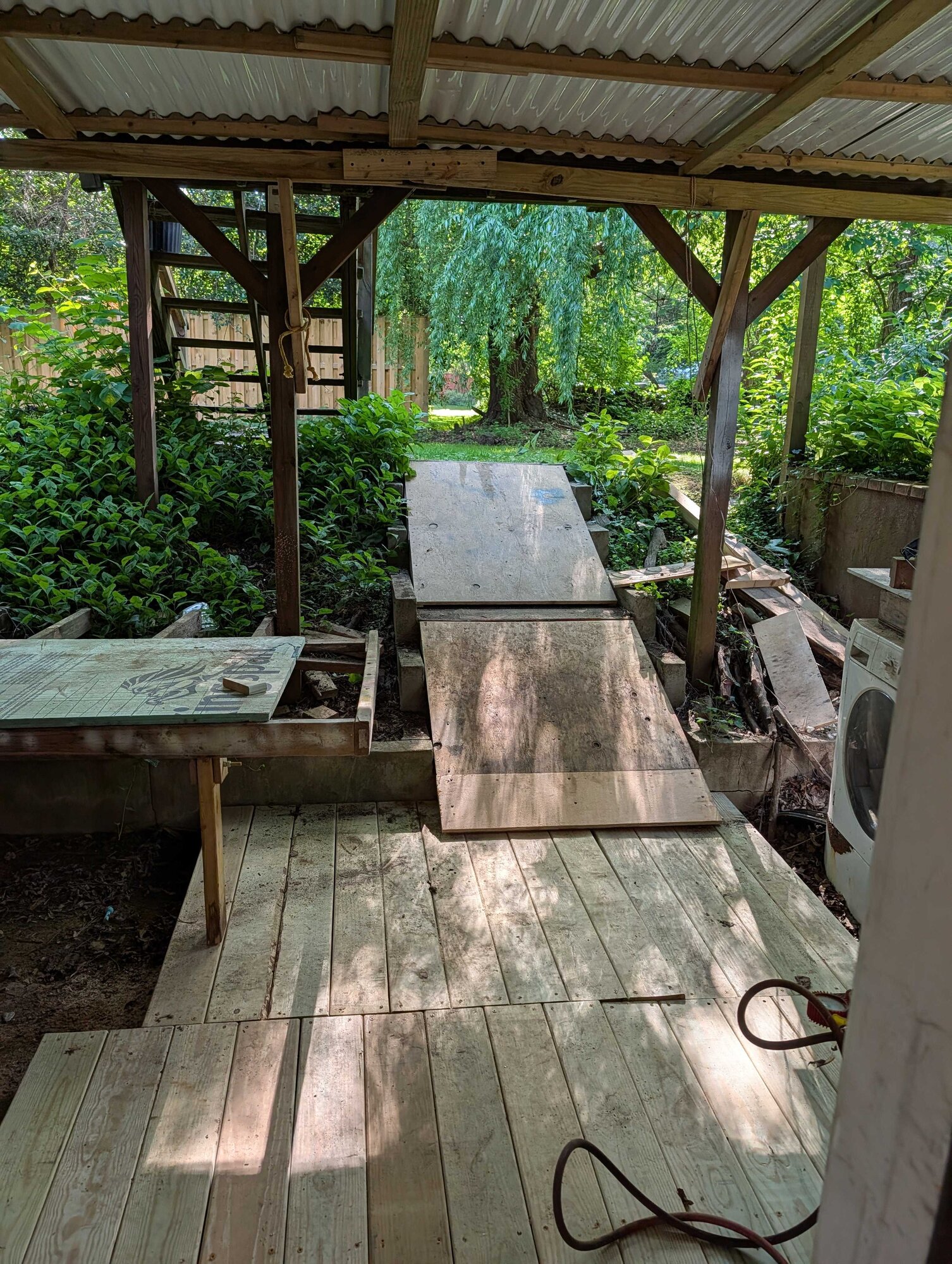
The boards have stringers on the underside, like a stair, so they don't slide.
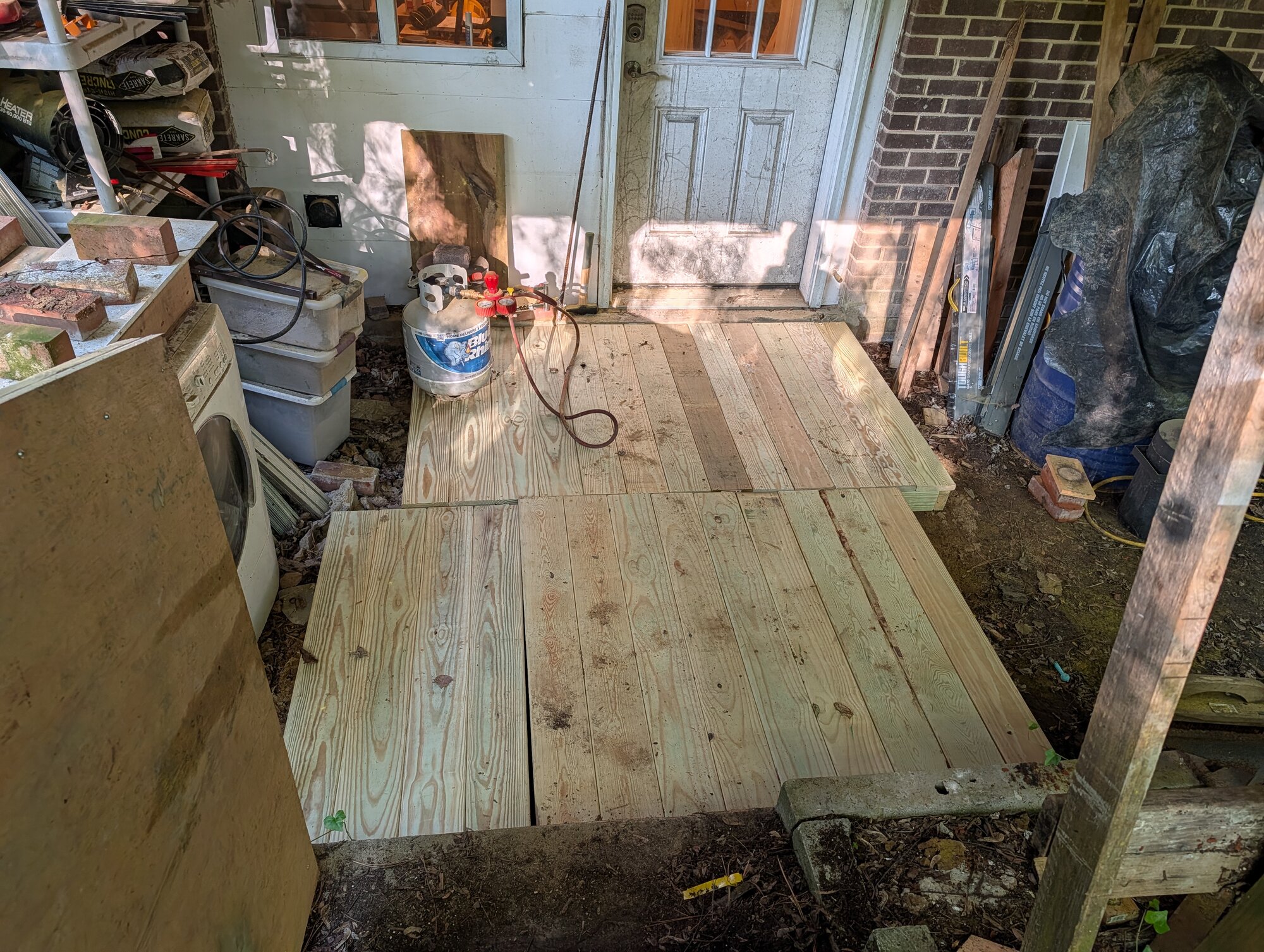
The platform at the bottom, under the deck, covers the steps down to the shop door, so the laser can roll straight in.
June 5: uncrating complete. I realized that it has wheels. I'd planned to move it across the lawn on a dolly, but that wasn't necessary.
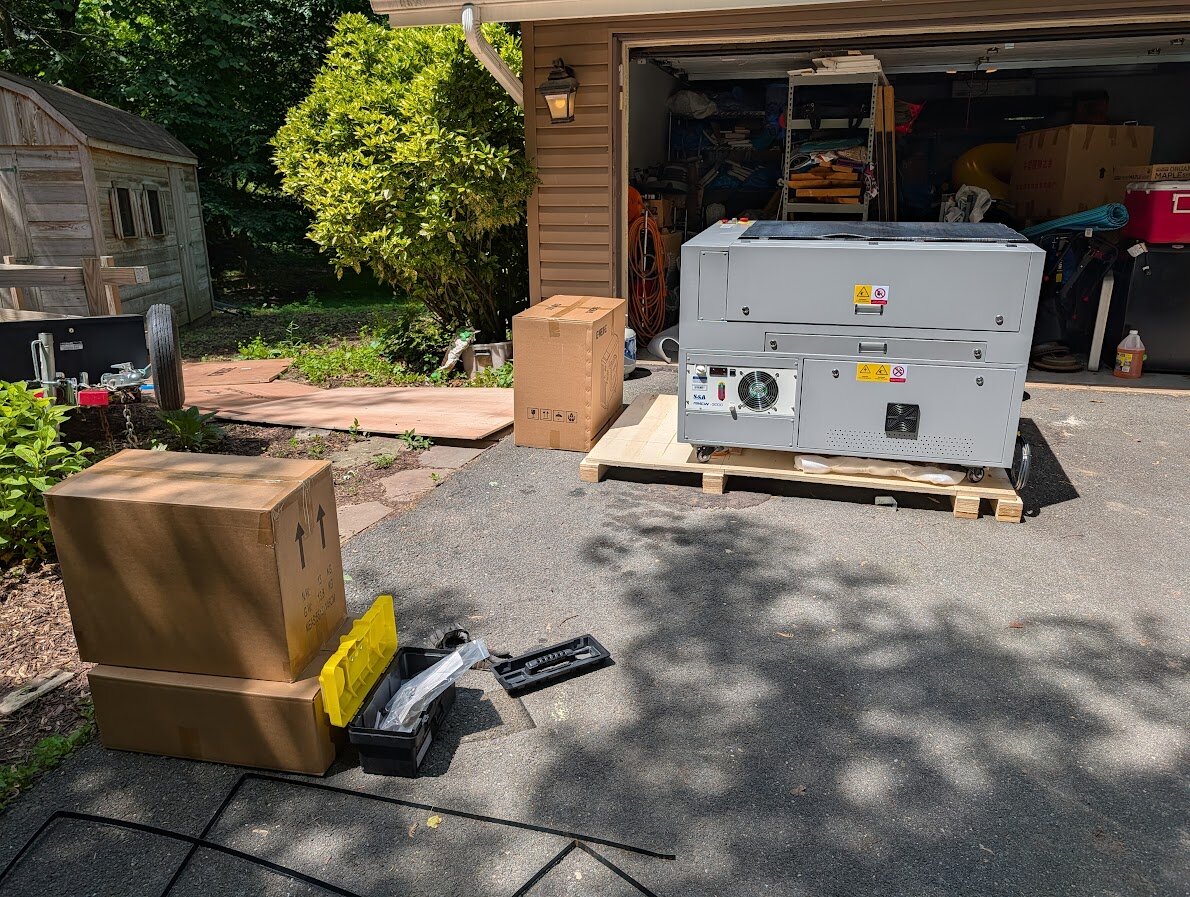
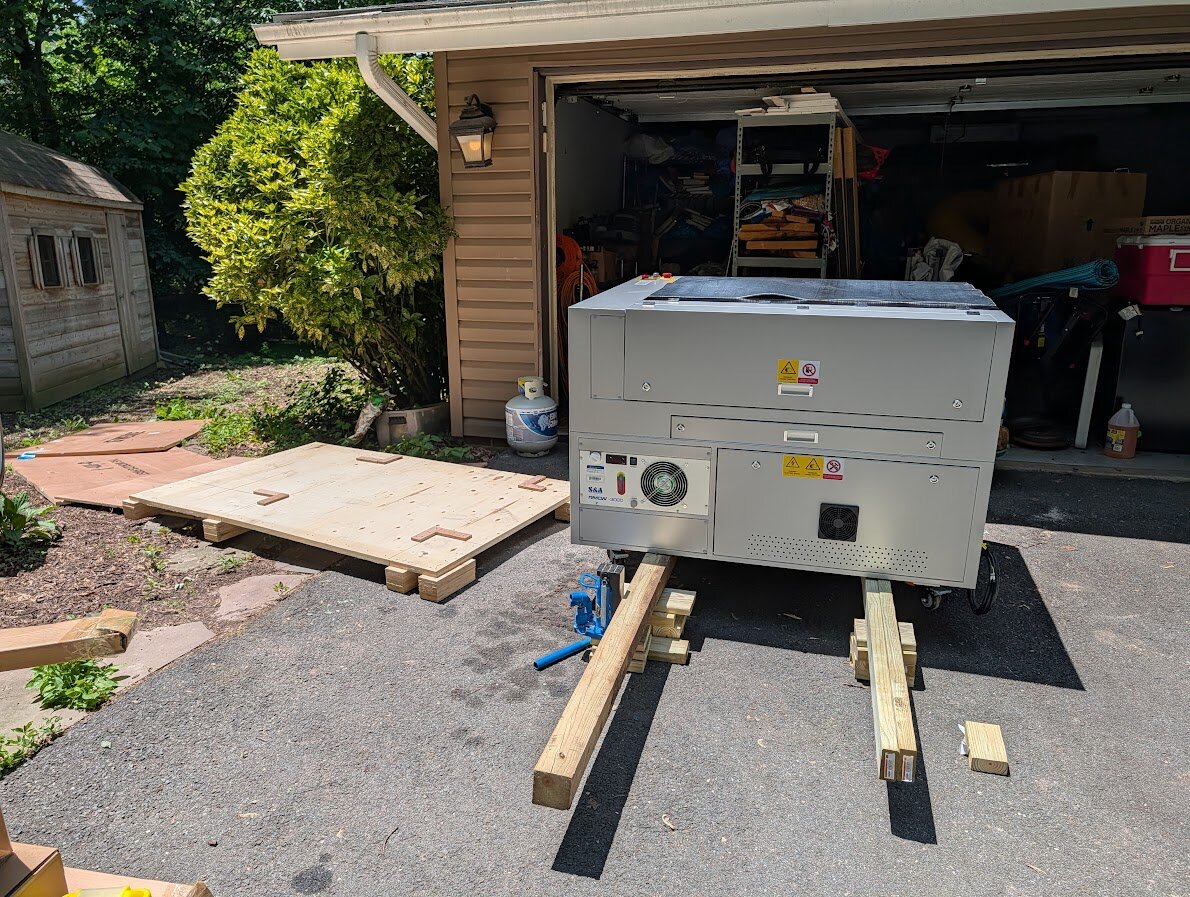
The laser on its pallet, on the driveway.
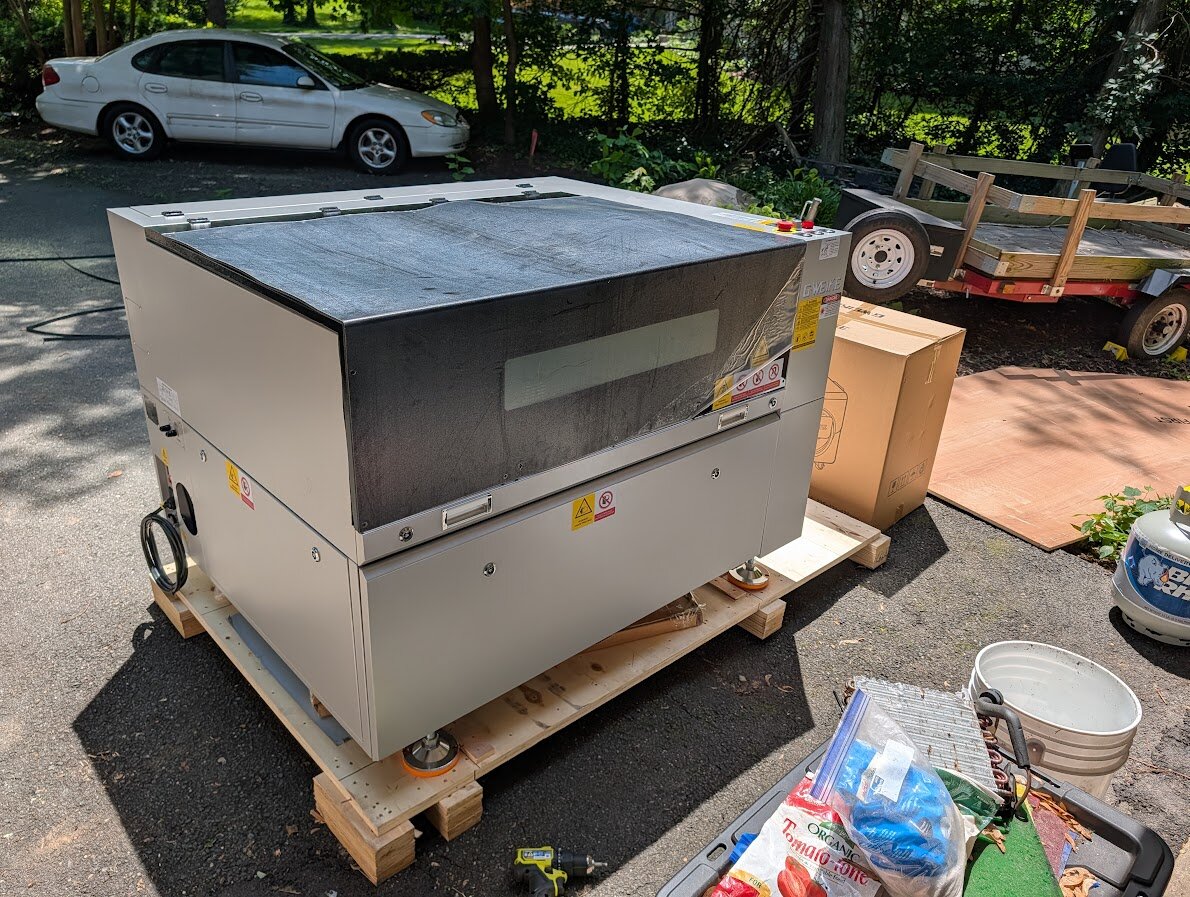
If you don't have a forklift but move heavy things, get a toe jack (the blue thing here). It's the secret weapon in machinery relocation, as it can sneak in under a gap as small as about half an inch. You can easily use a long crowbar to lift most things that far. It's slow, since you sometimes run out of travel, so you jack it up, rest the thing on blocks (which are called "cribbing"), and block up the jack.
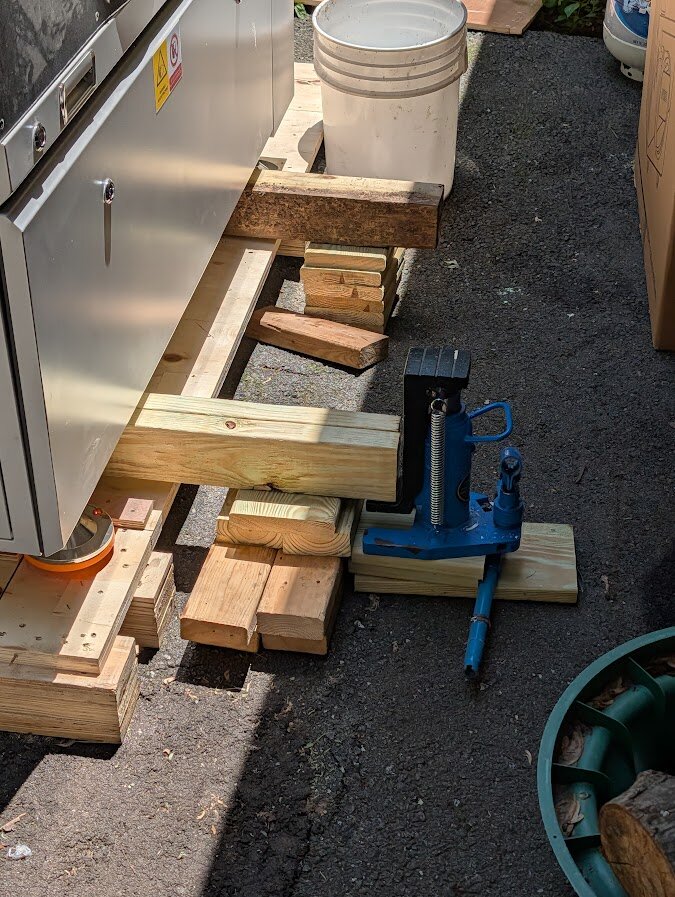
As it turned out, I didn't even really need the toe jack: it's "light" enough that I could have just used the crowbar to get it high enough to slide a block in or out, which is what I wound up doing for the trip down.
Into the basement (June 6 to 13, 2026)
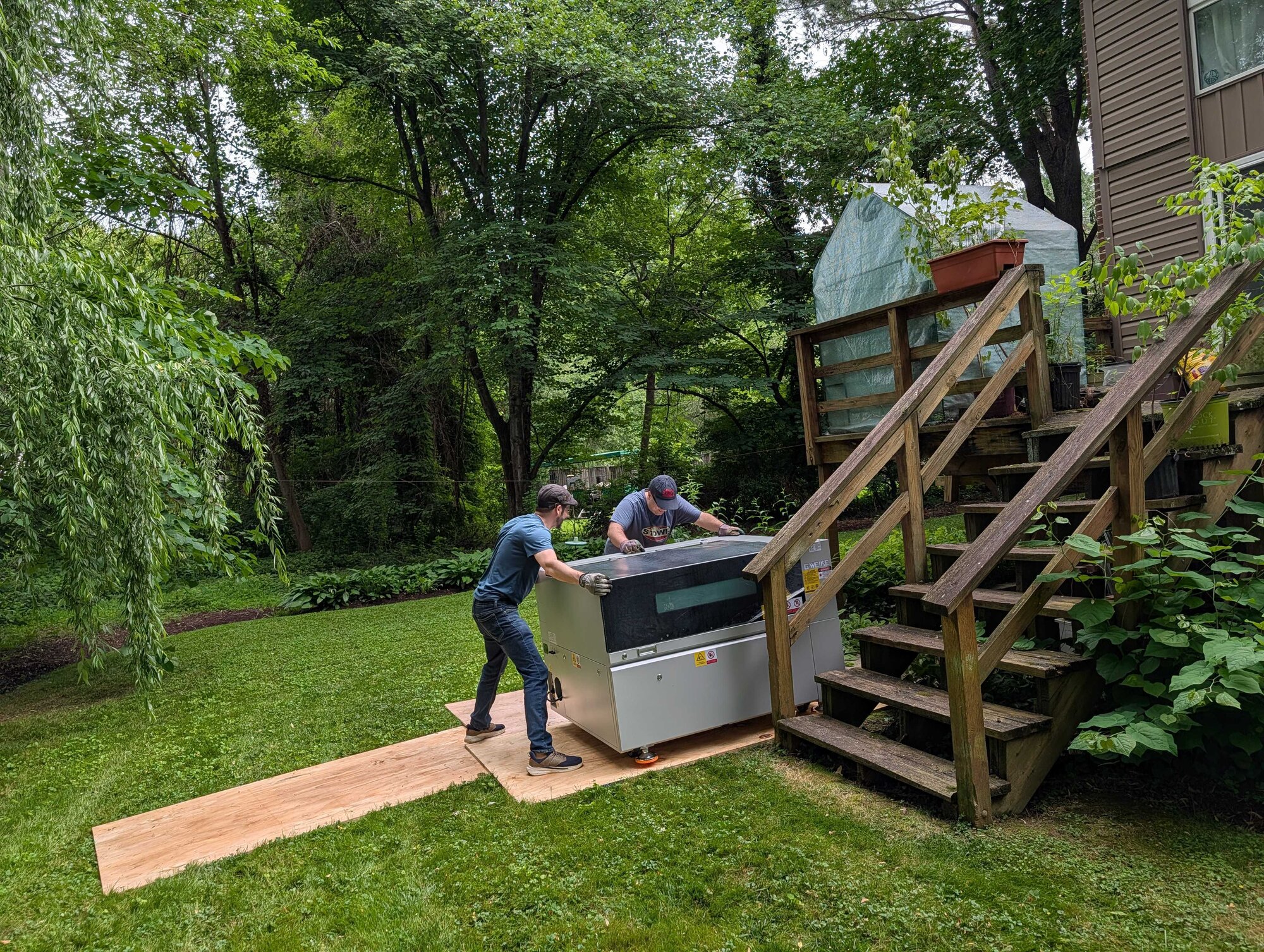
June 6: phase one complete. No casualties. Pushing it across plywood to the deck stairs. A brother and a friend are very helpful, especially as they are both younger than me.
A line across the lawn, with the laser at the far end.
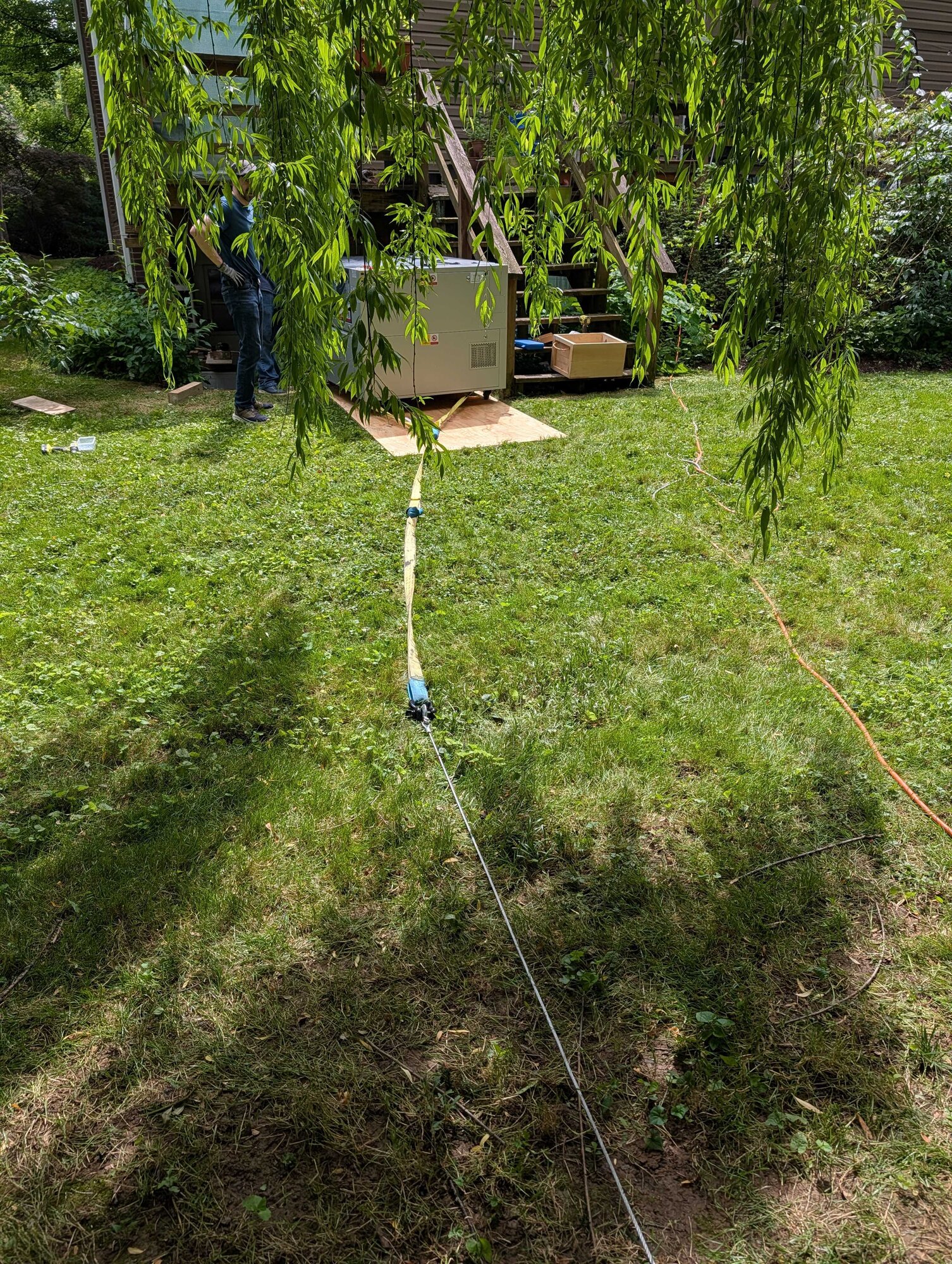
The other end of that line: a puller strapped to a tree at the far side of the yard.
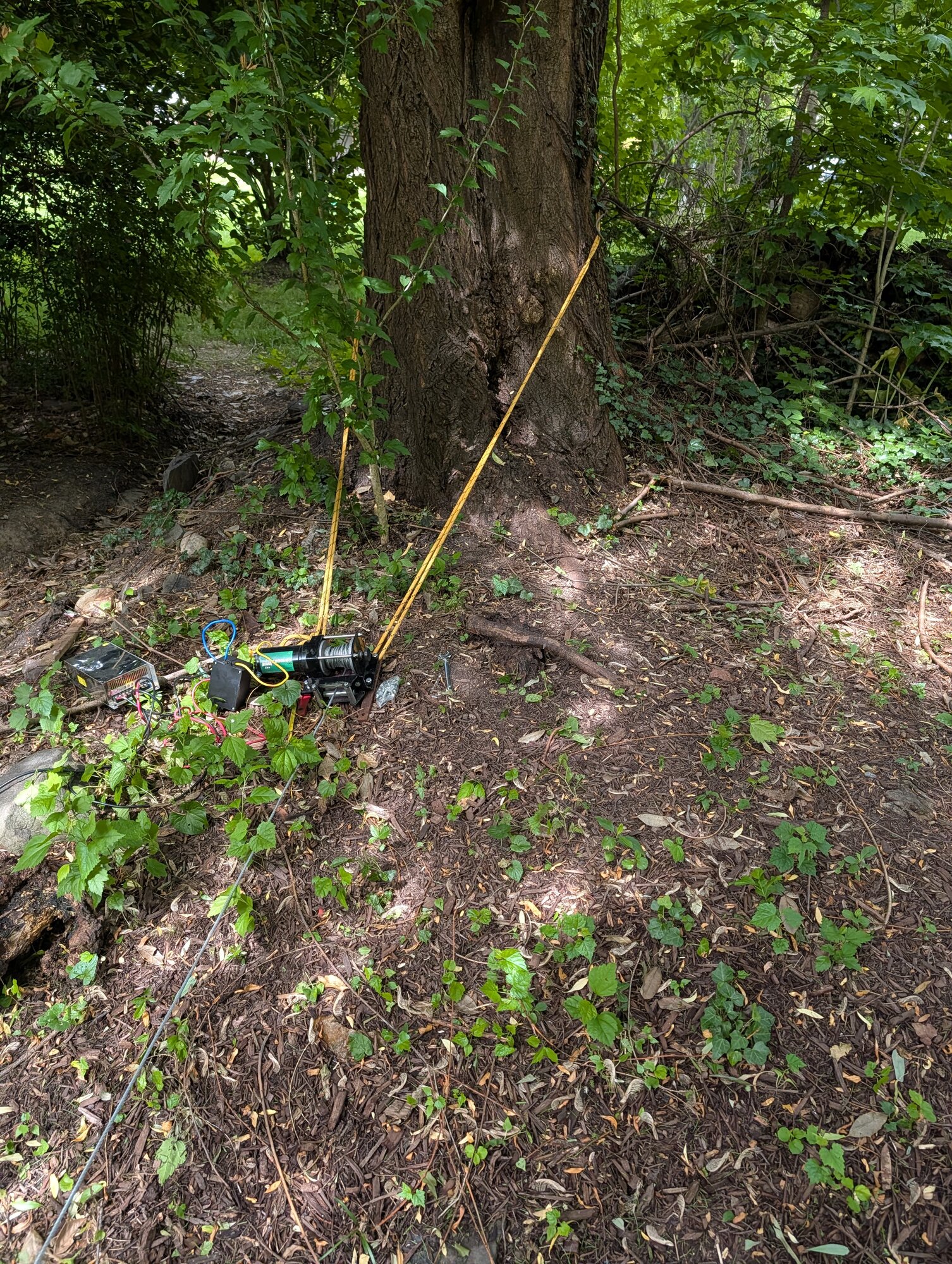
Taking it apart (June 9, 2026)
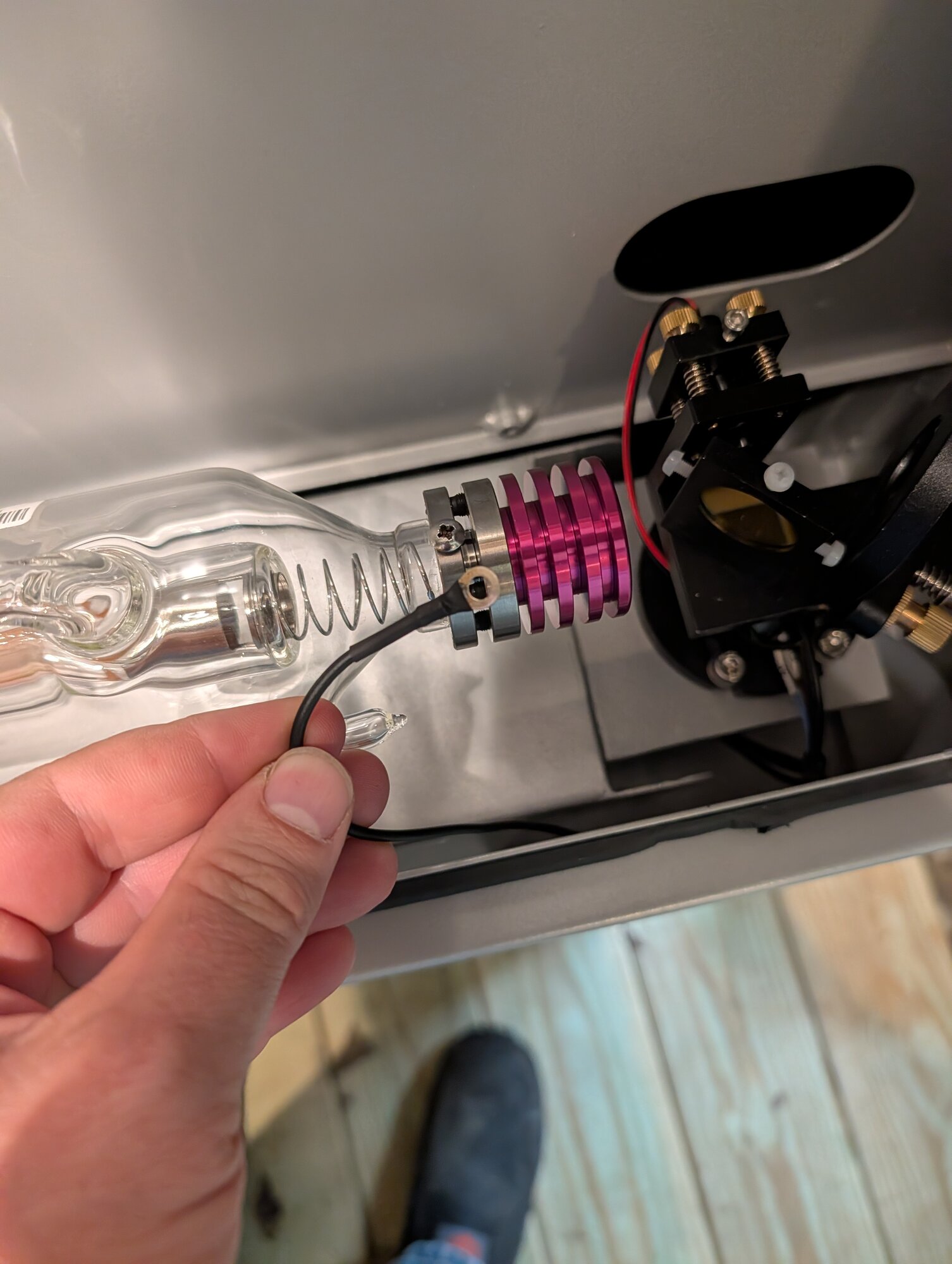
The machine wasn't going to fit through the door as delivered, so before it went inside I stripped off everything that added height or weight. The CO2 laser tube, which is glass, came out first.
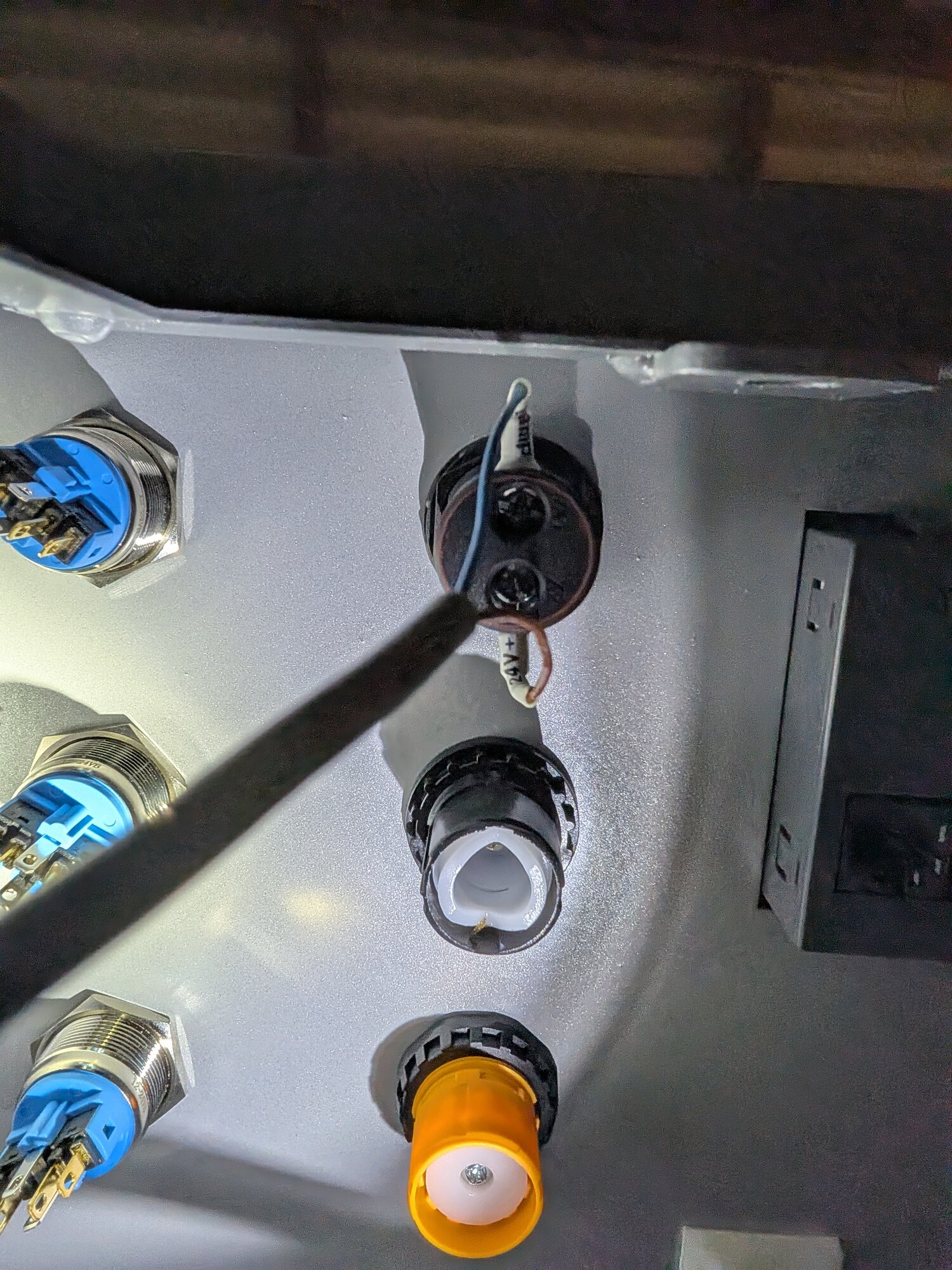
The control panel's buttons, disconnected from behind.
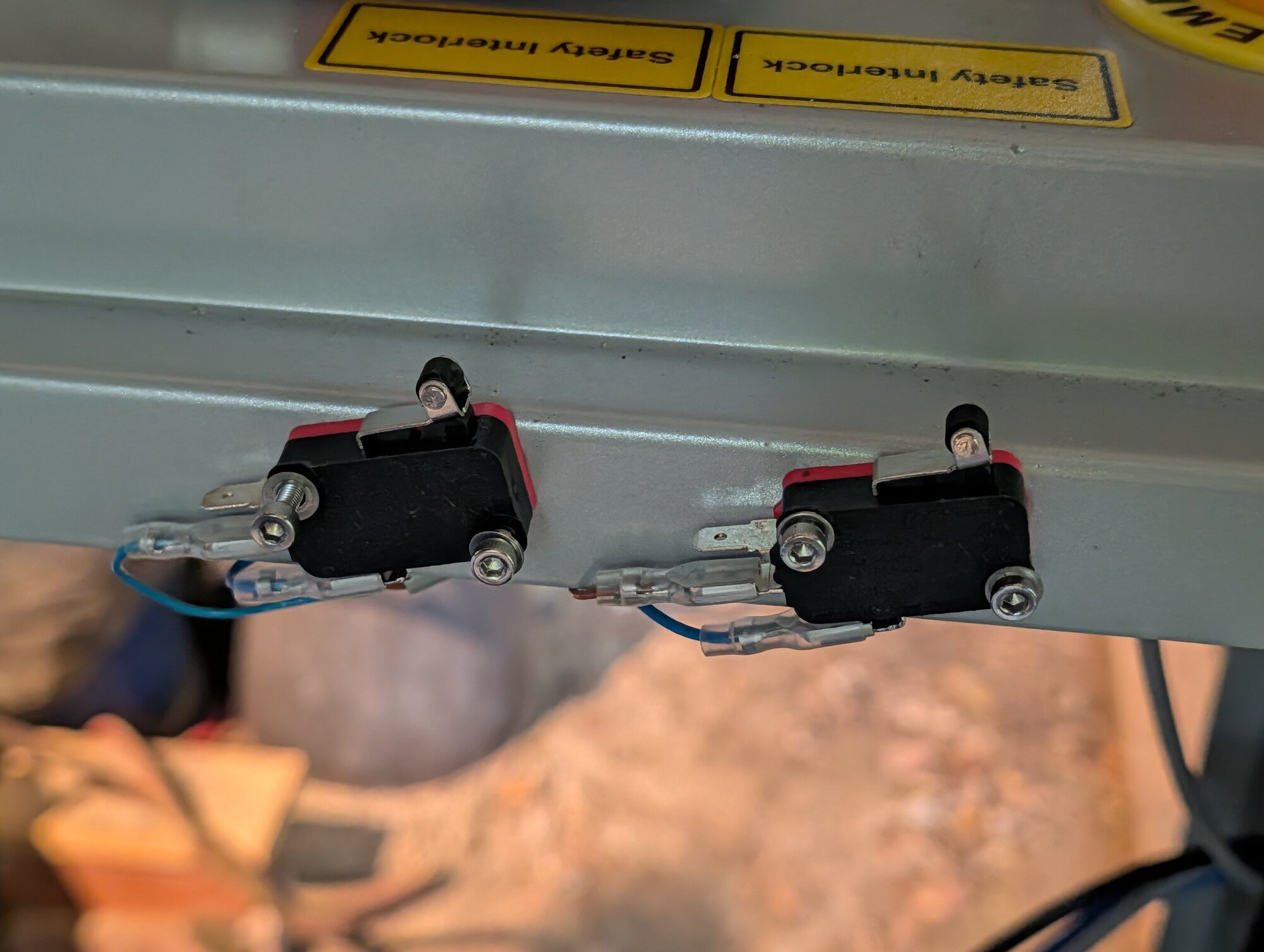
The lid came off too, which meant unhooking its safety interlock switches.
June 9: inside! And one room away from where it needs to be. Better yet, the remainder of the work can be done in air conditioning. Note that we had to pull off the top and tip it on its side to get through the door.
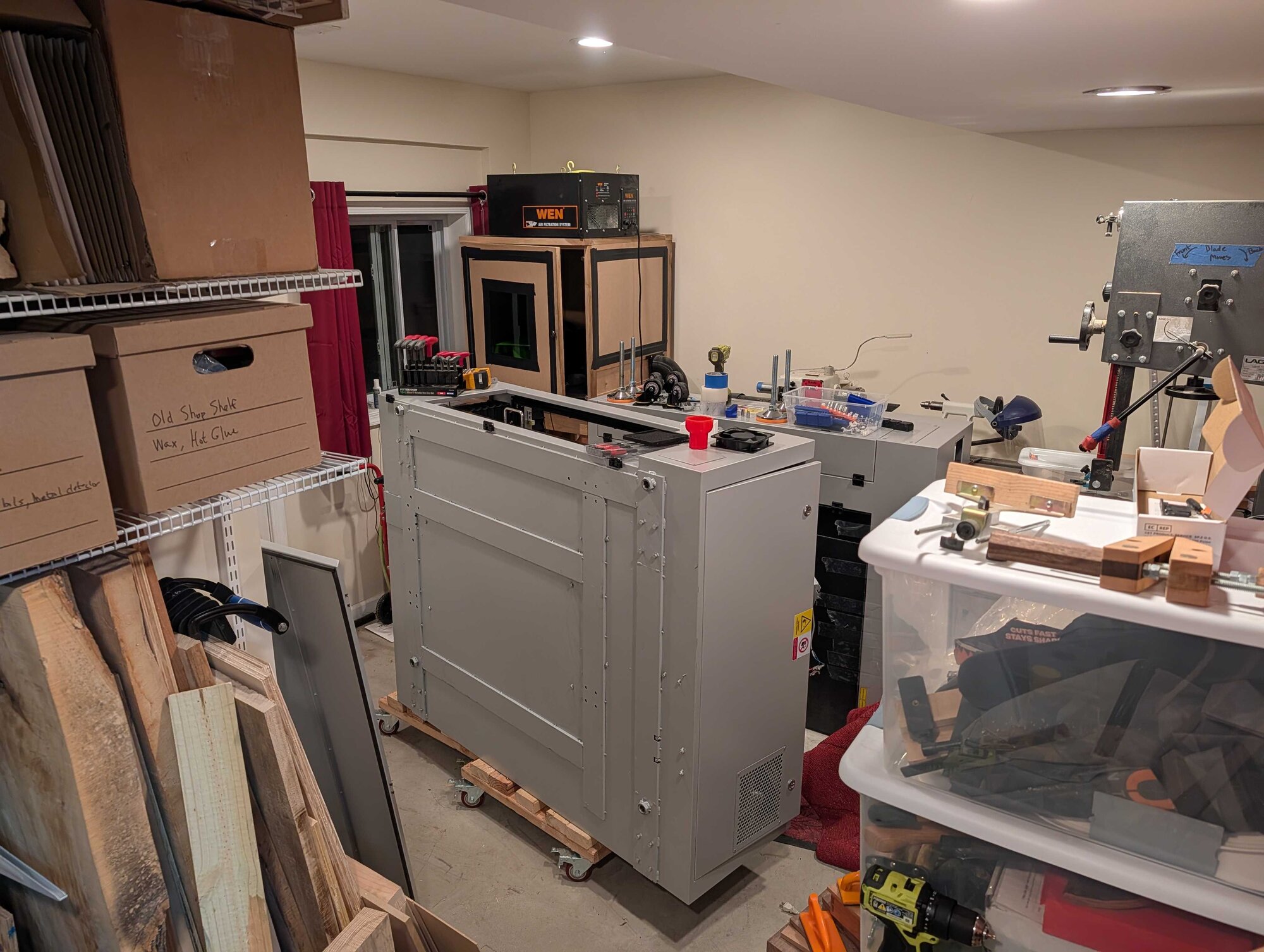
June 11: in the final room.
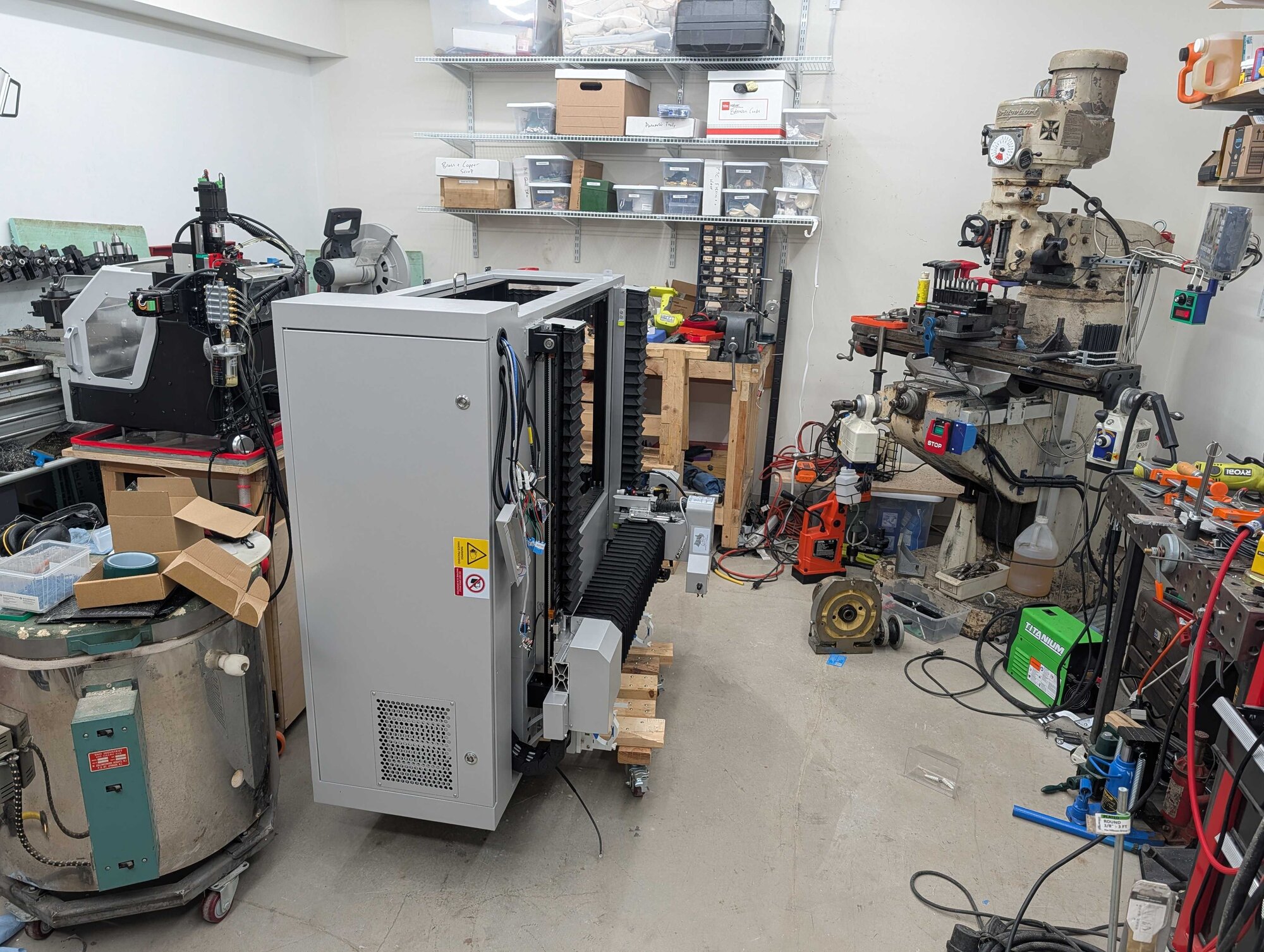
Still not a ton of clearance, even after cutting into the wall.
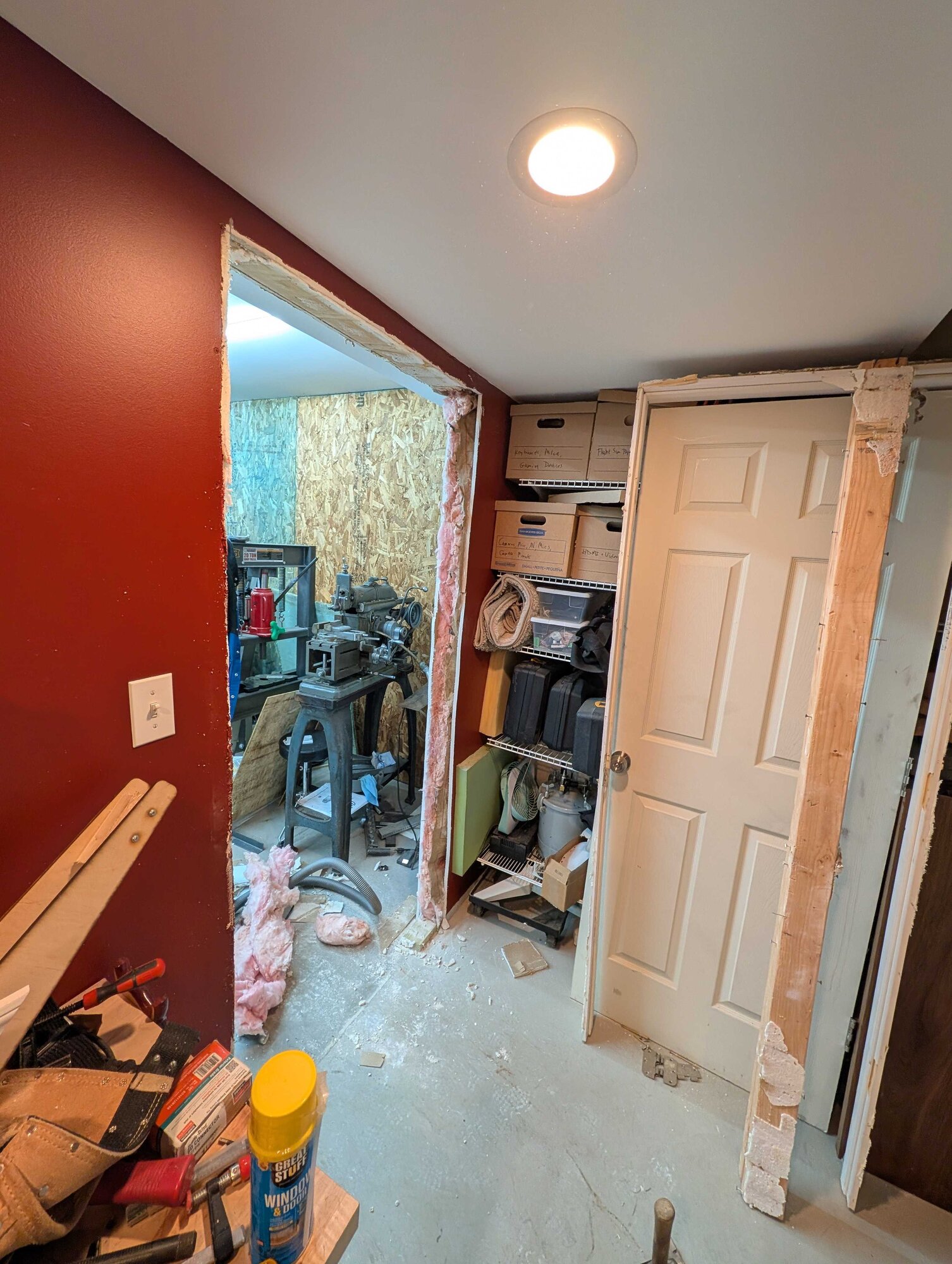
The view from the other side.
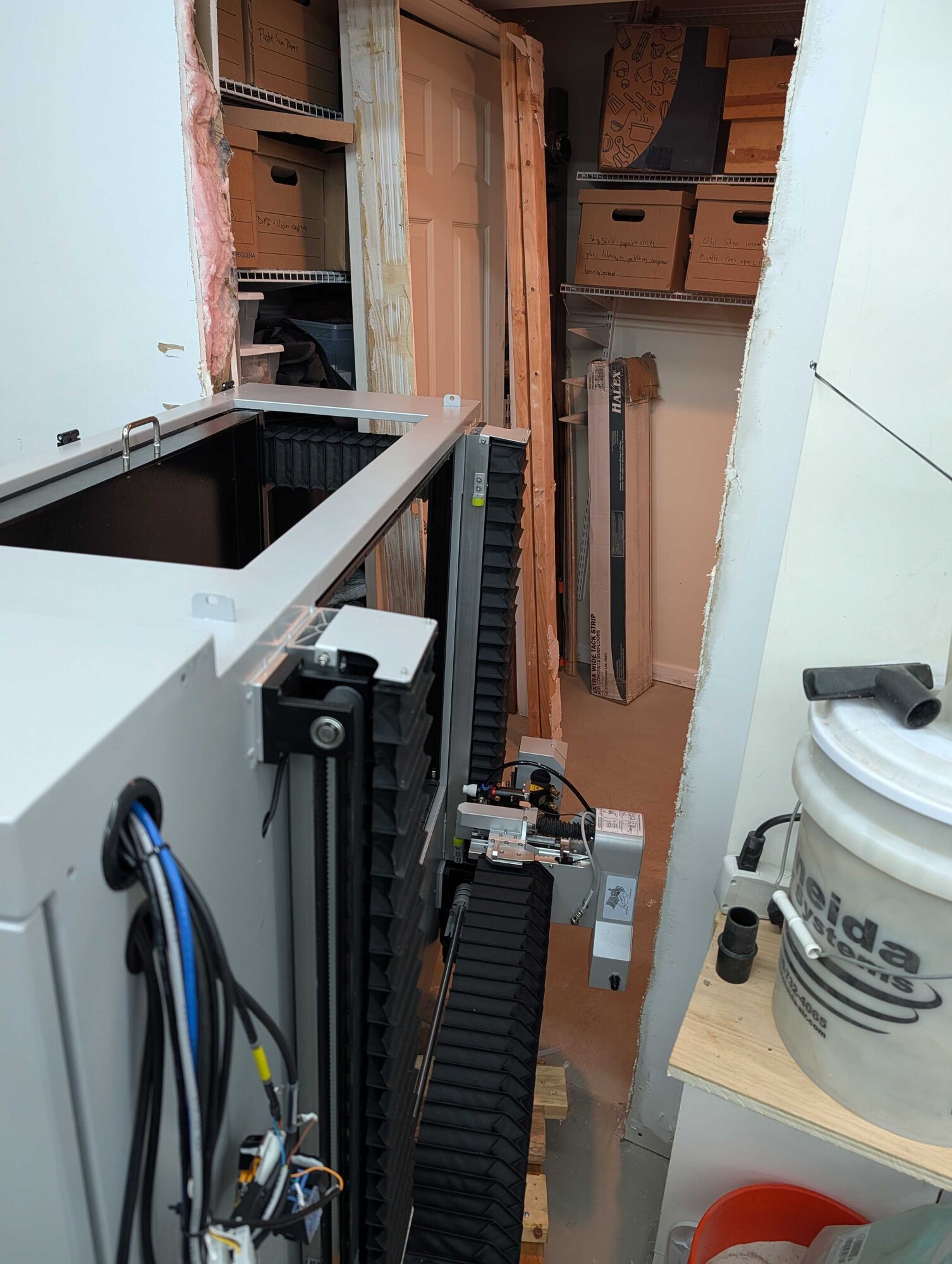
The gantry sliding under the cut header, with about a finger's width to spare.
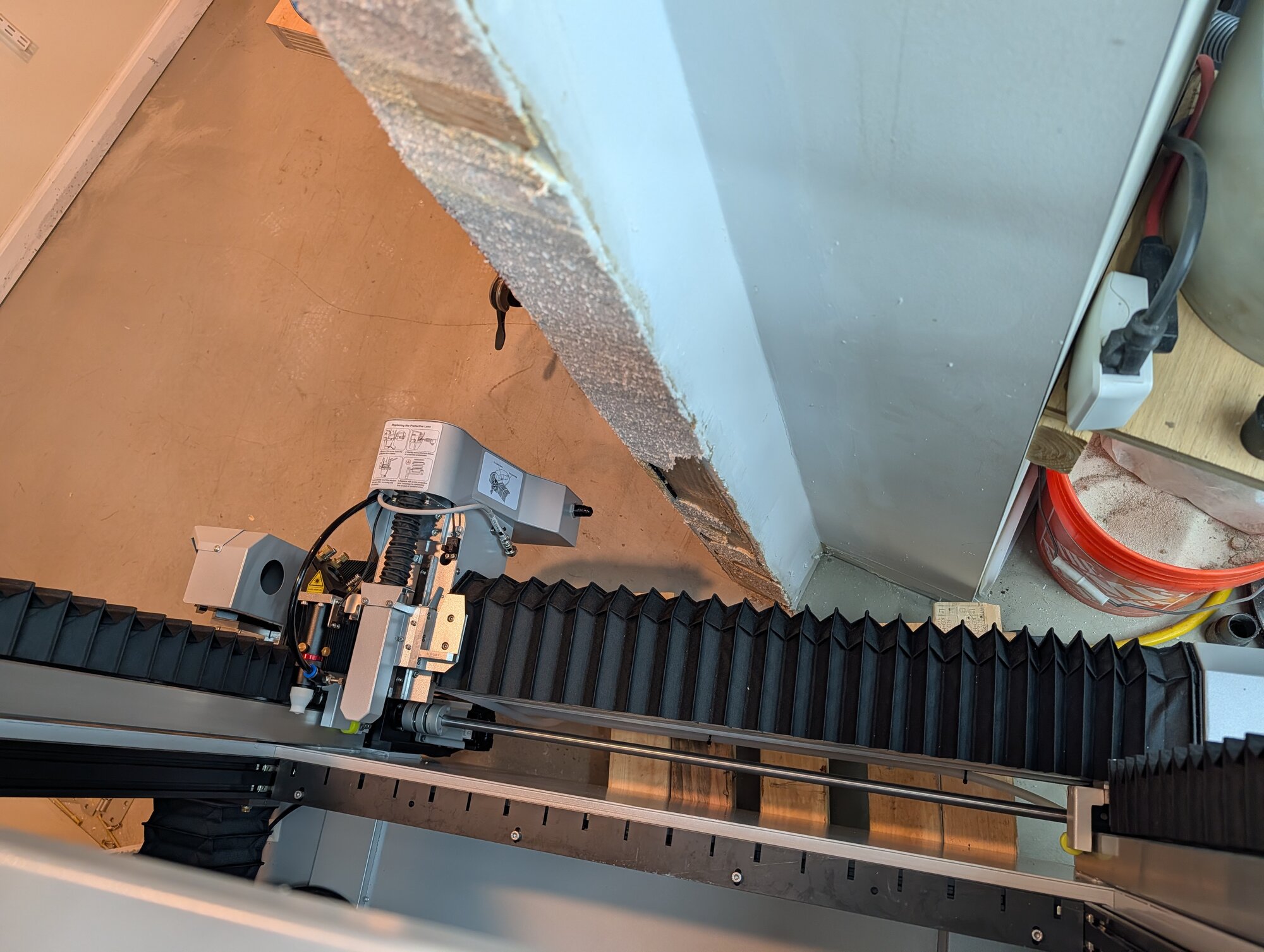
June 13: final orientation.
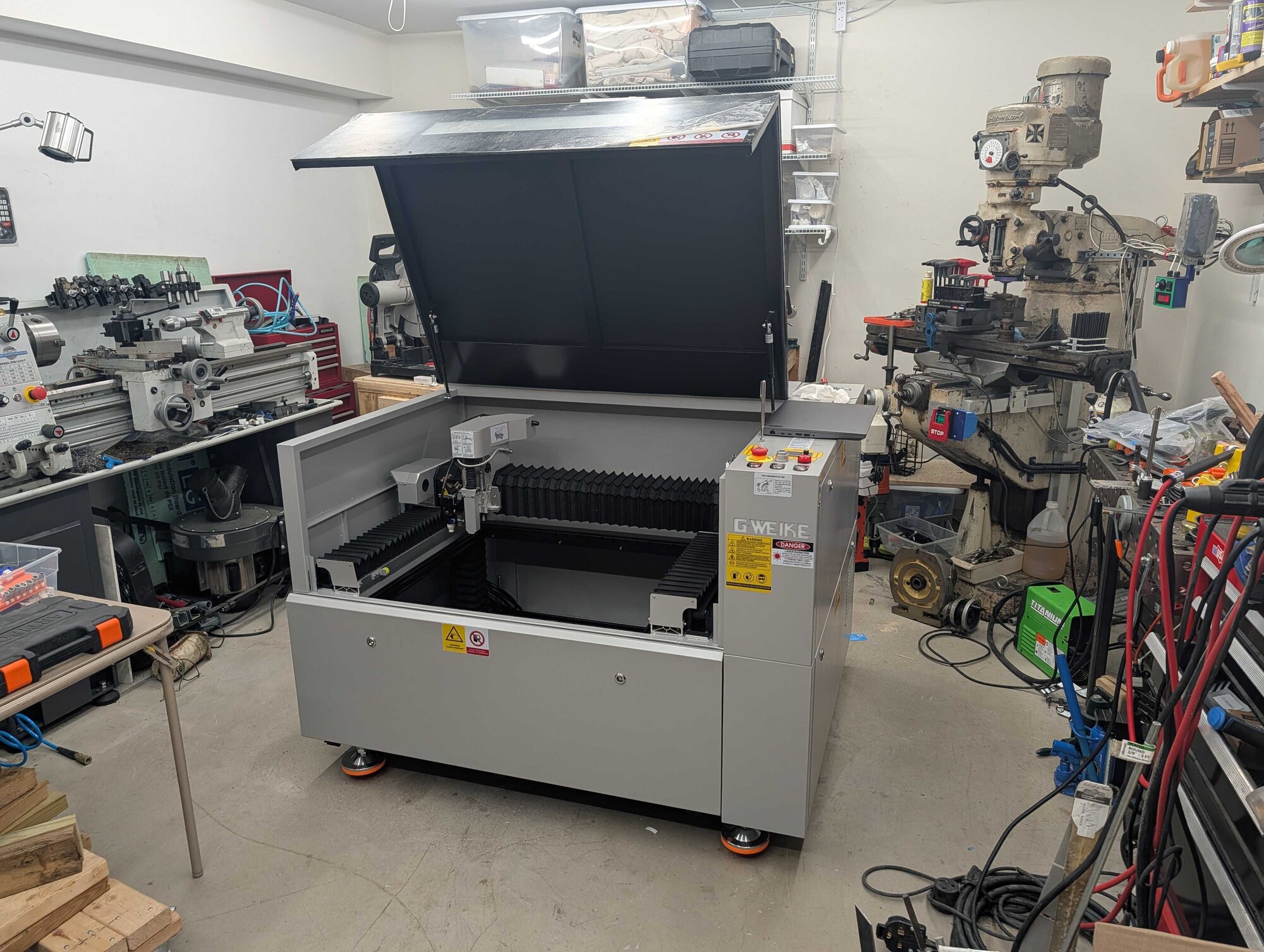
June 14: back together, with the lid and panels on, and the control console unpacked and waiting for its cables.
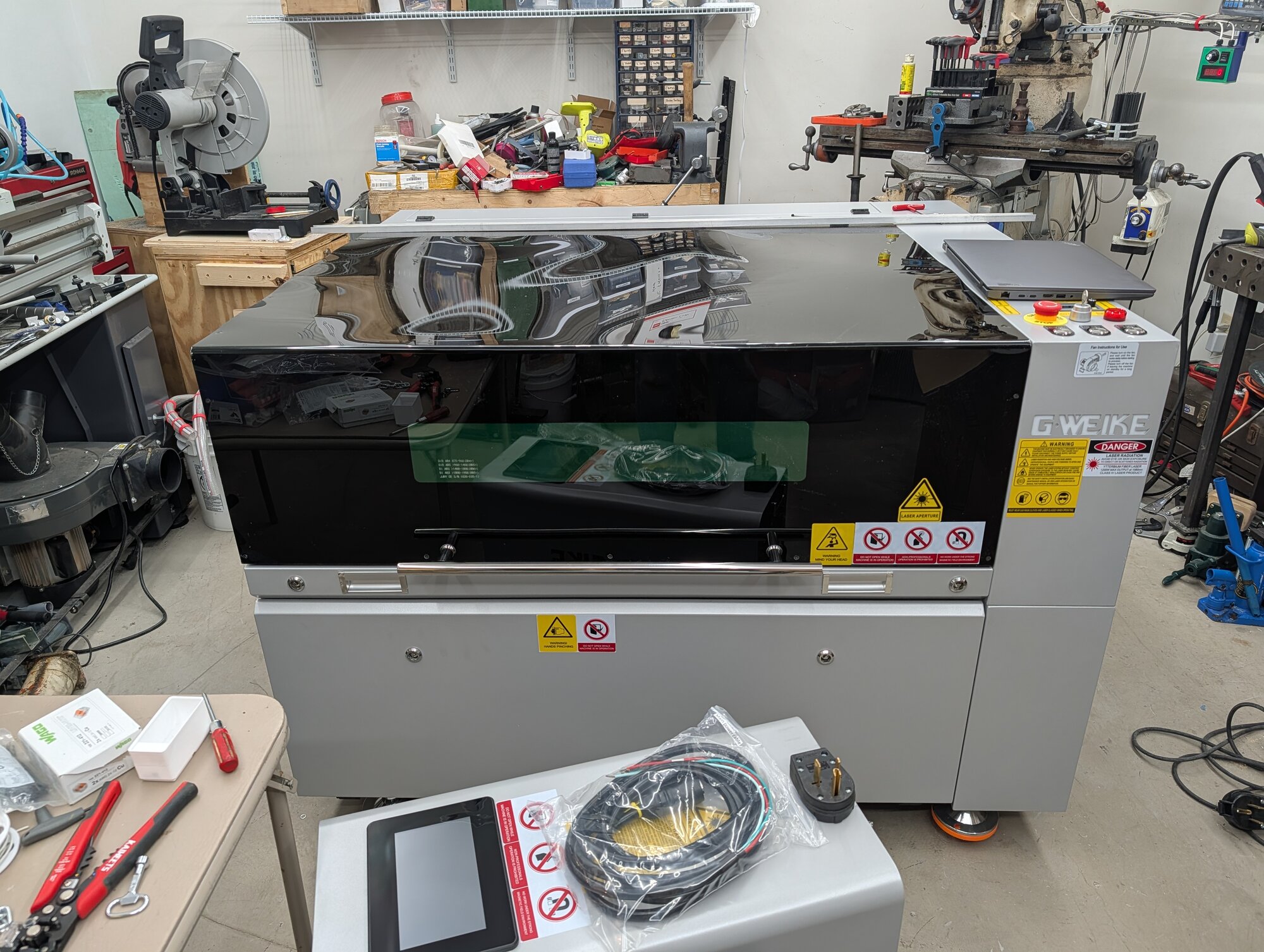
First cuts and ventilation
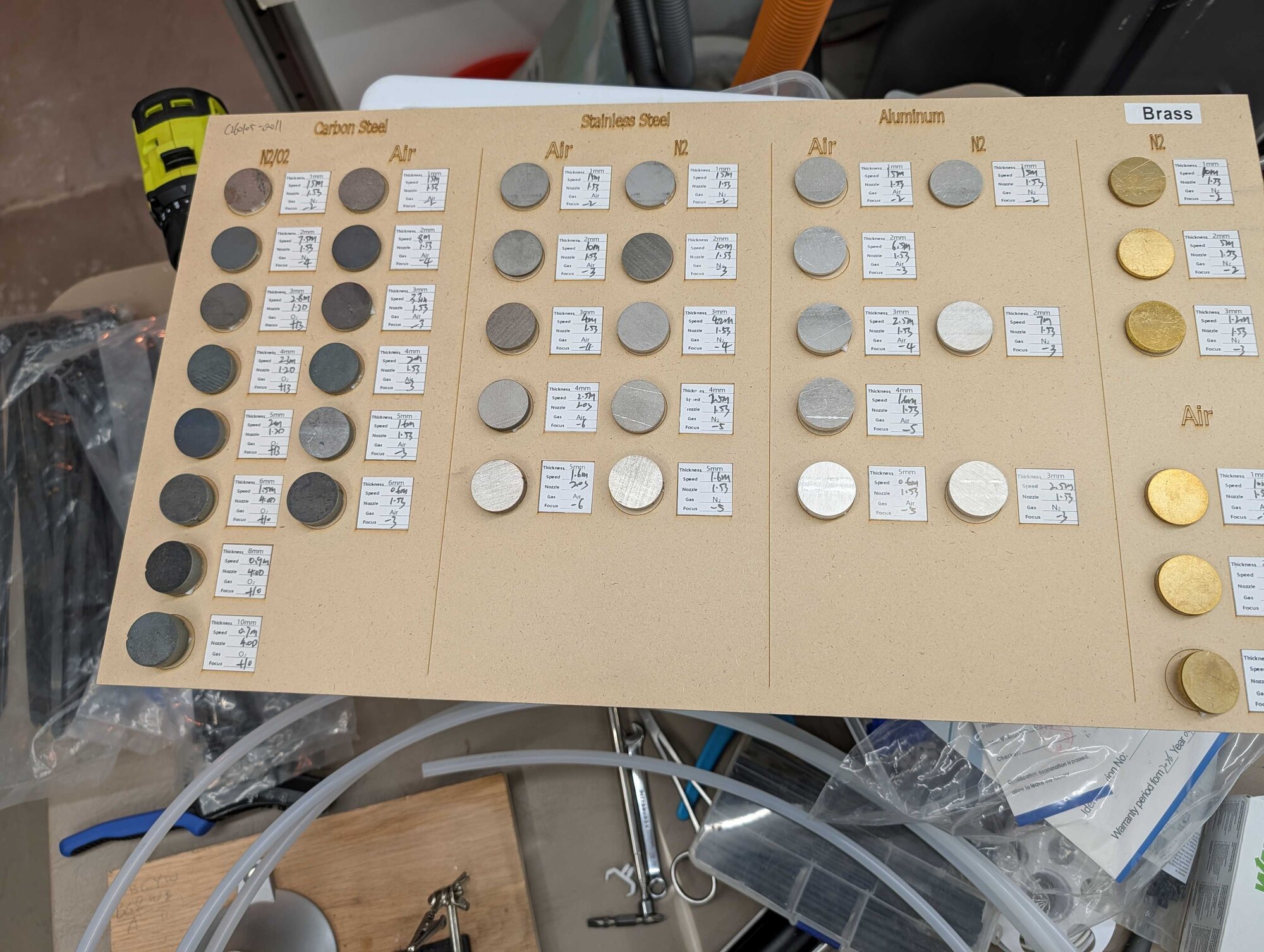
The sample cut board that comes with the machine. I believe it was cut on this very one.
I think I already figured out the first upgrade I want.
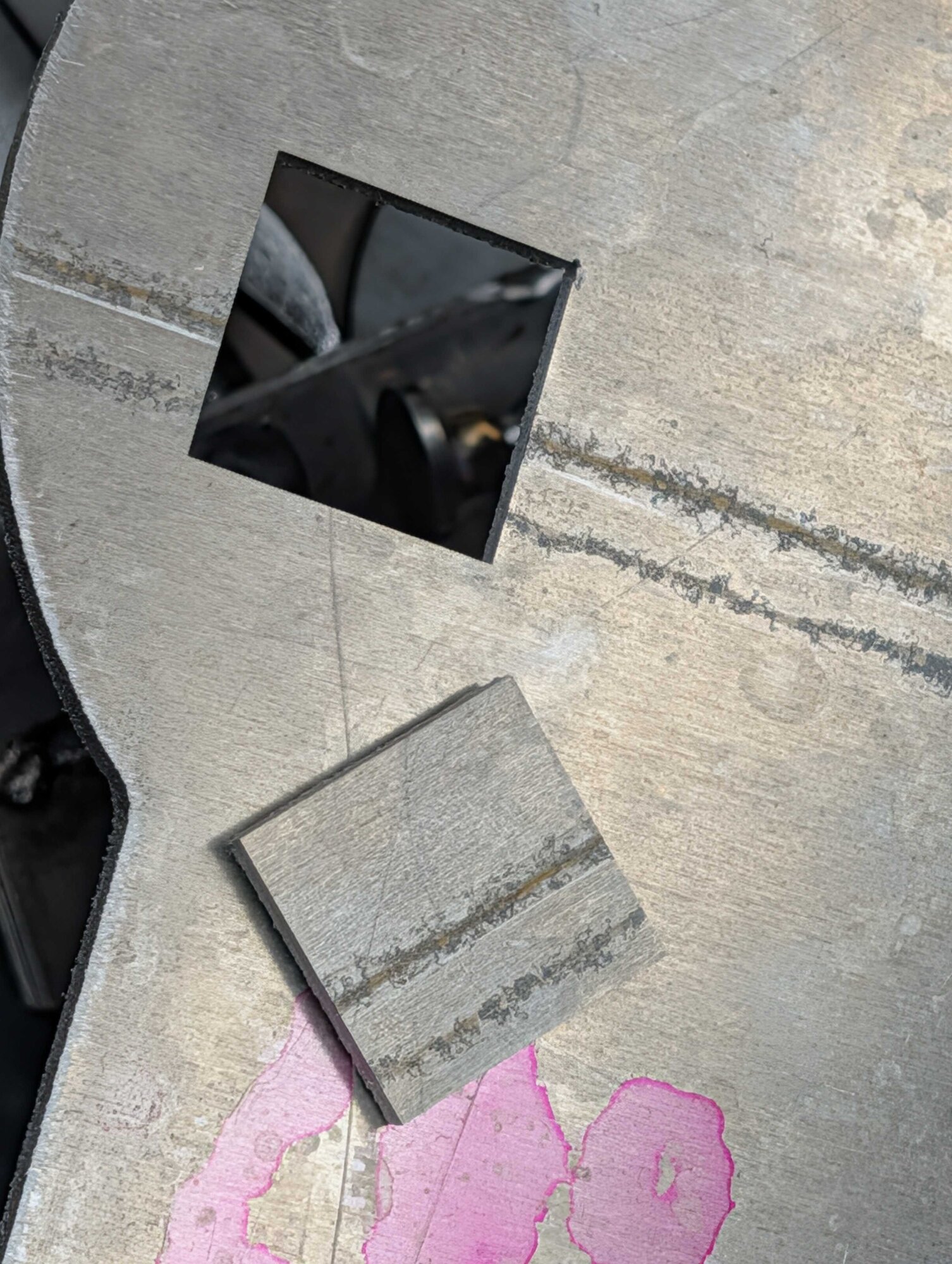
June 14: success! The kerf is so tight that the piece sits in the cutout on its own. It didn't fall out when the cutout was complete.
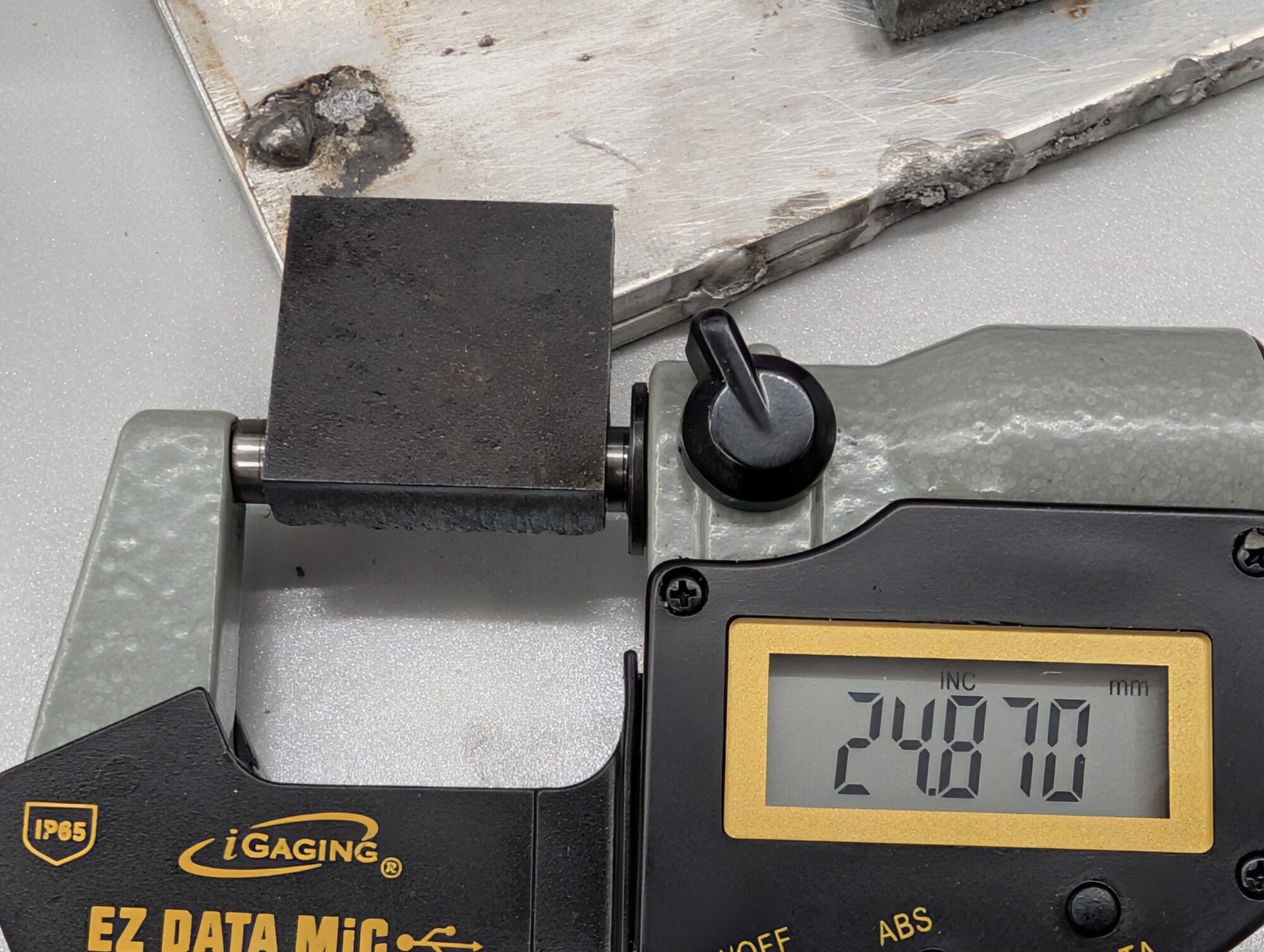
June 16: I tried a quarter-inch steel square, target size 25 mm. The measured dimension was 24.870 mm.
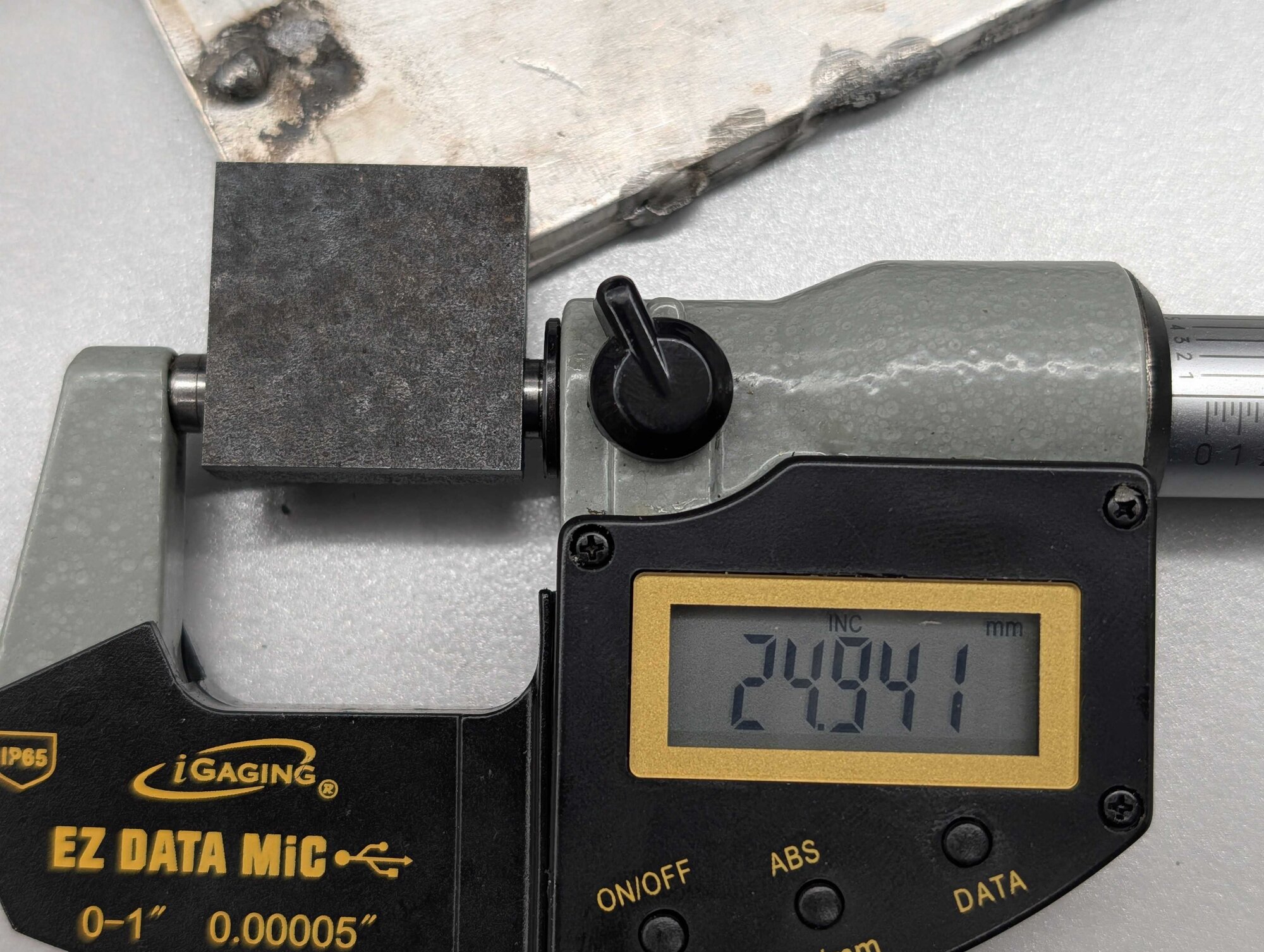
And the other direction, 24.941 mm. I didn't adjust for kerf, so the error is roughly the thickness of a piece of paper.
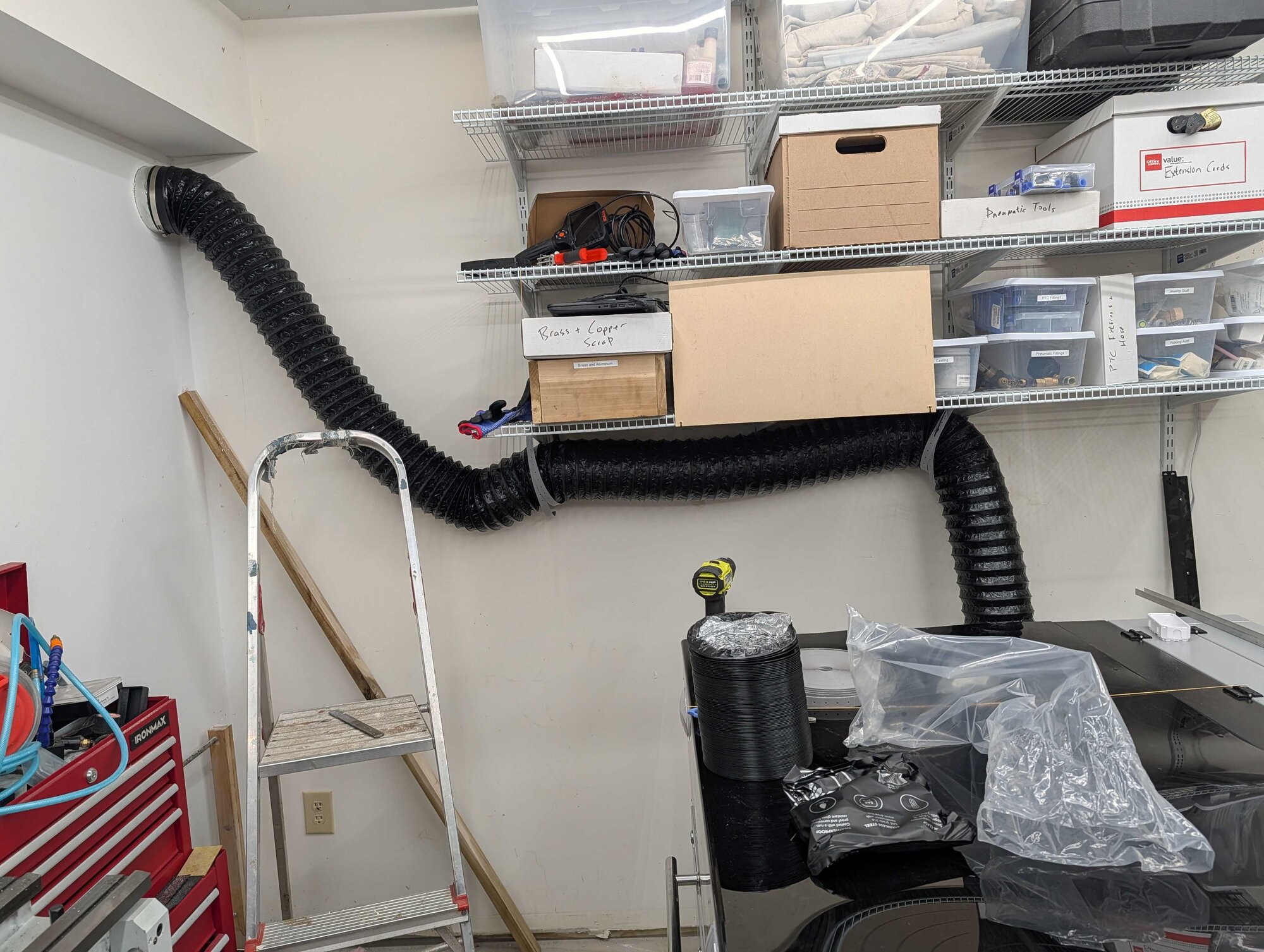
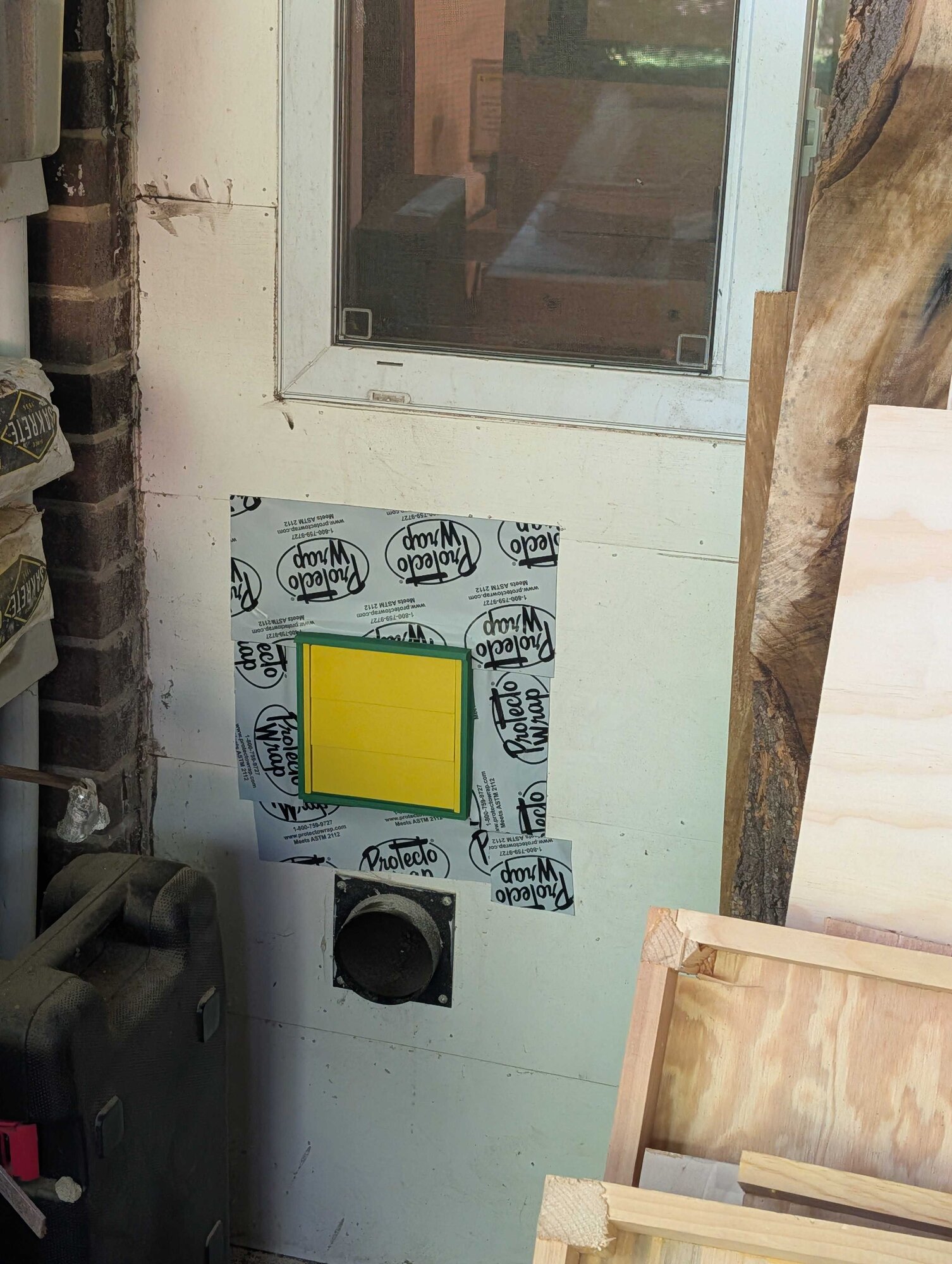
Ventilation. It's also a CO2 laser, which can cut wood and acrylic, much of which smokes a lot more, since the material is being burned and not just melted. It exits out the back, hence the long run, because that's where it needs to be in order not to get blocked by snow in the winter.
The exhaust opening in the wall.
My other lasers are on Fiber Laser Setup and CO2 Laser Setup.