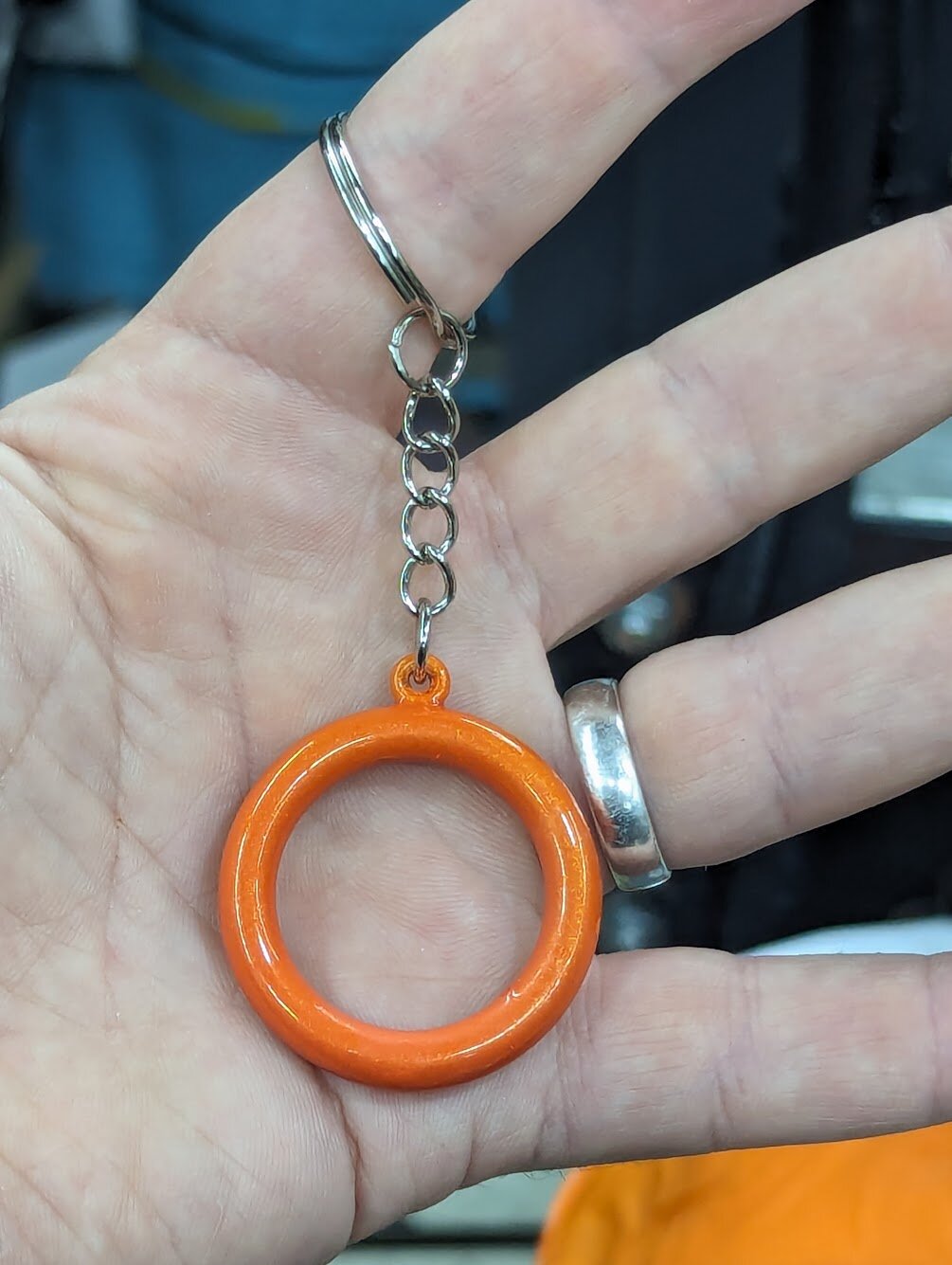
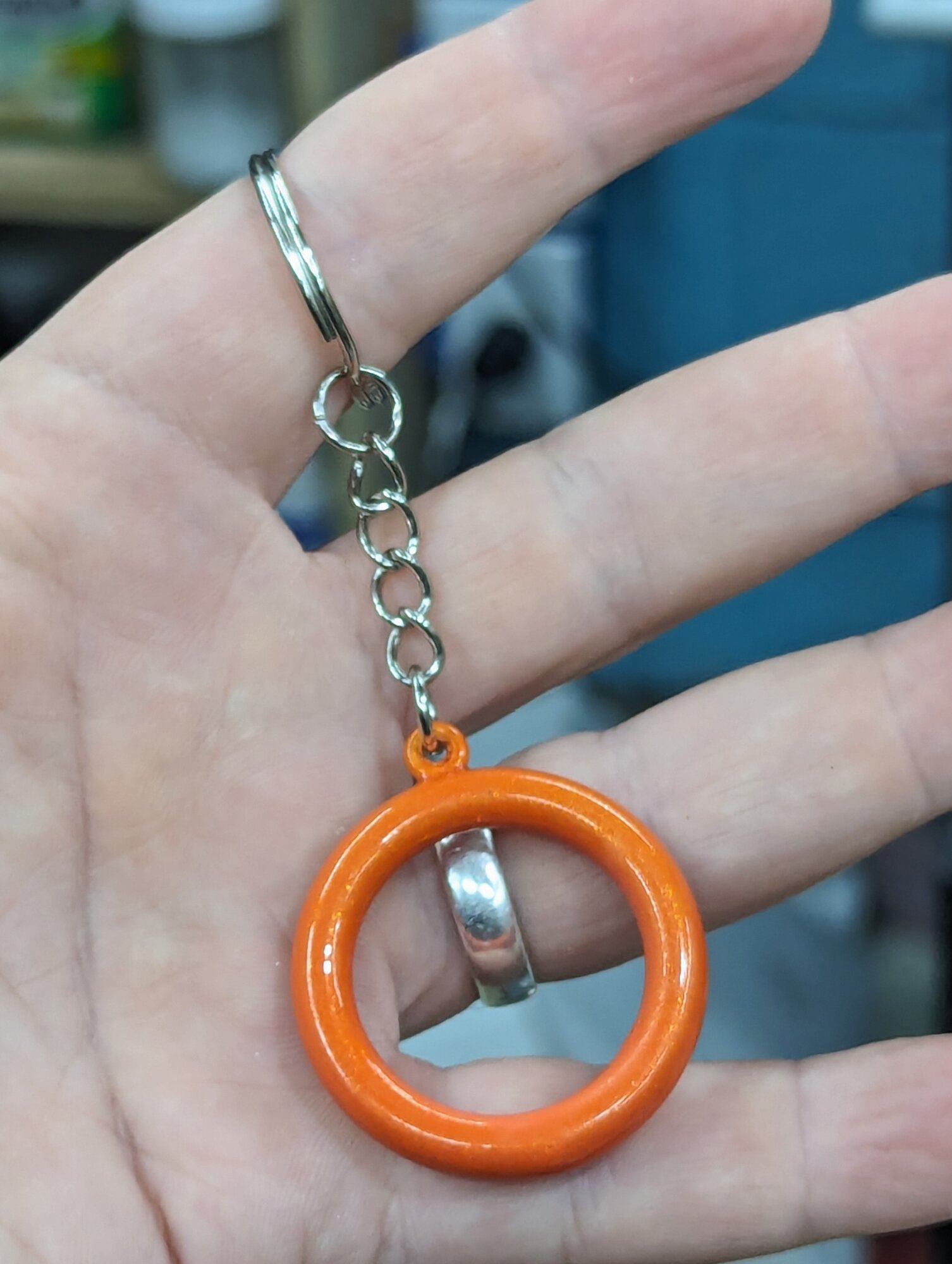
This was the second year I made gifts for the departing seniors on our FRC robotics team (the first was in 2023), and the first year I made them by melting down parts of the robot. This particular keychain is a "note", the name for one of the game pieces from that year's game. Powder coated, of course.
How they got made (May 2024)
The plan was to melt down some of the broken parts from that year's robot and cast keychains in the shape of the game piece, and maybe laser something onto them if there was time. This project was way more of a pain than I thought it would be, but I learned a fair amount, so I'll call it a win.
Patterns and test pieces
The first step was printing the pattern for burnout: a tree of several ring patterns with hanging loops, joined to a central sprue, for lost-PLA casting.
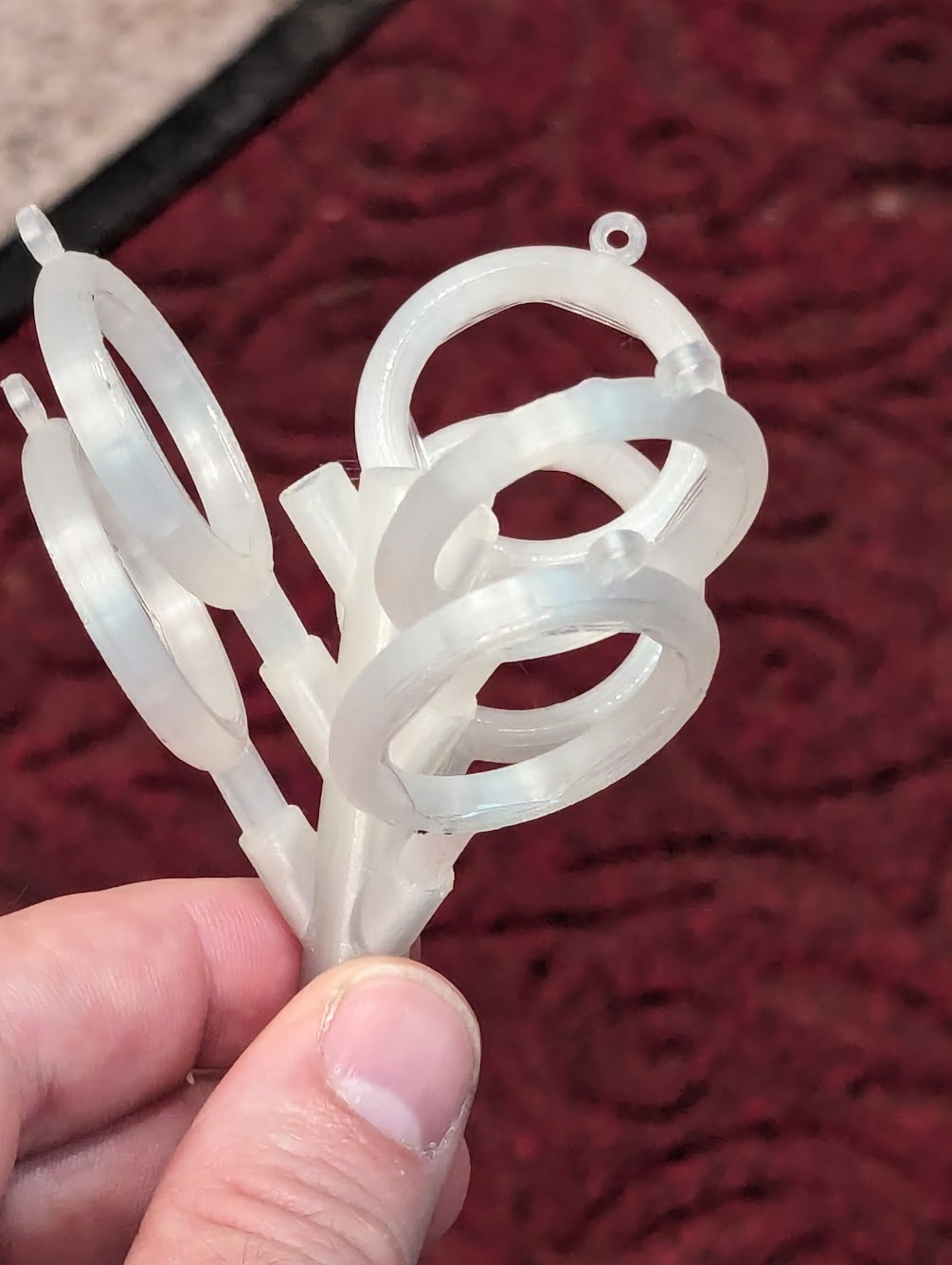
I'd had some problems with an earlier print, but it gave me some test pieces to mess with.
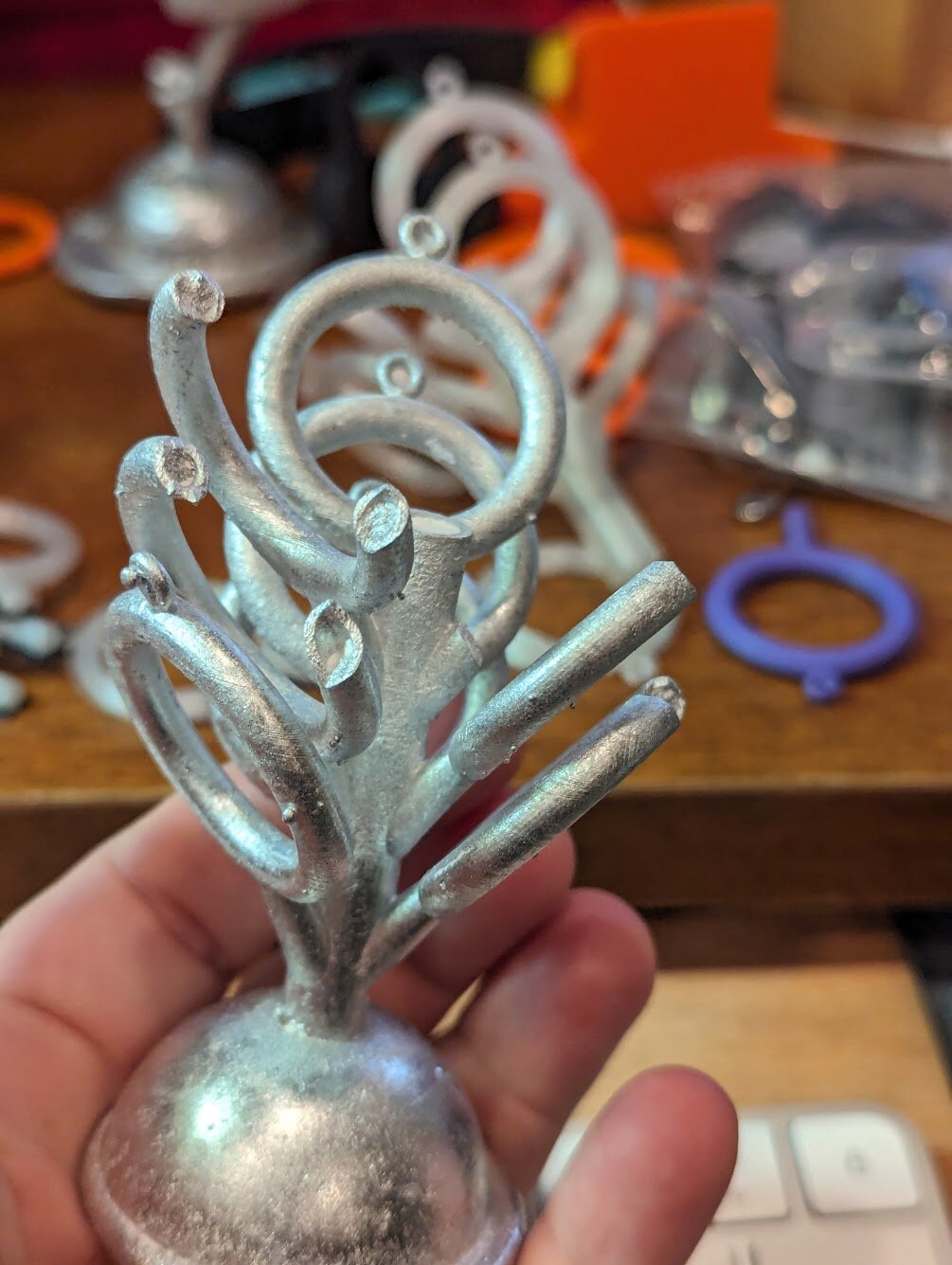
The media tumbler cleaned them up really nicely.
Anodizing, first try
It was mad scientist night: my first try at anodizing, on a test piece. The results were okay; more experimentation was needed. I use sodium bisulfate rather than battery acid, for starters. As I understand it the process I used is pretty typical: clean, sodium hydroxide etch, anodize, dye, boil. I used 200mA for half an hour, which seemed pretty good. The main thing I need to do is clean better.
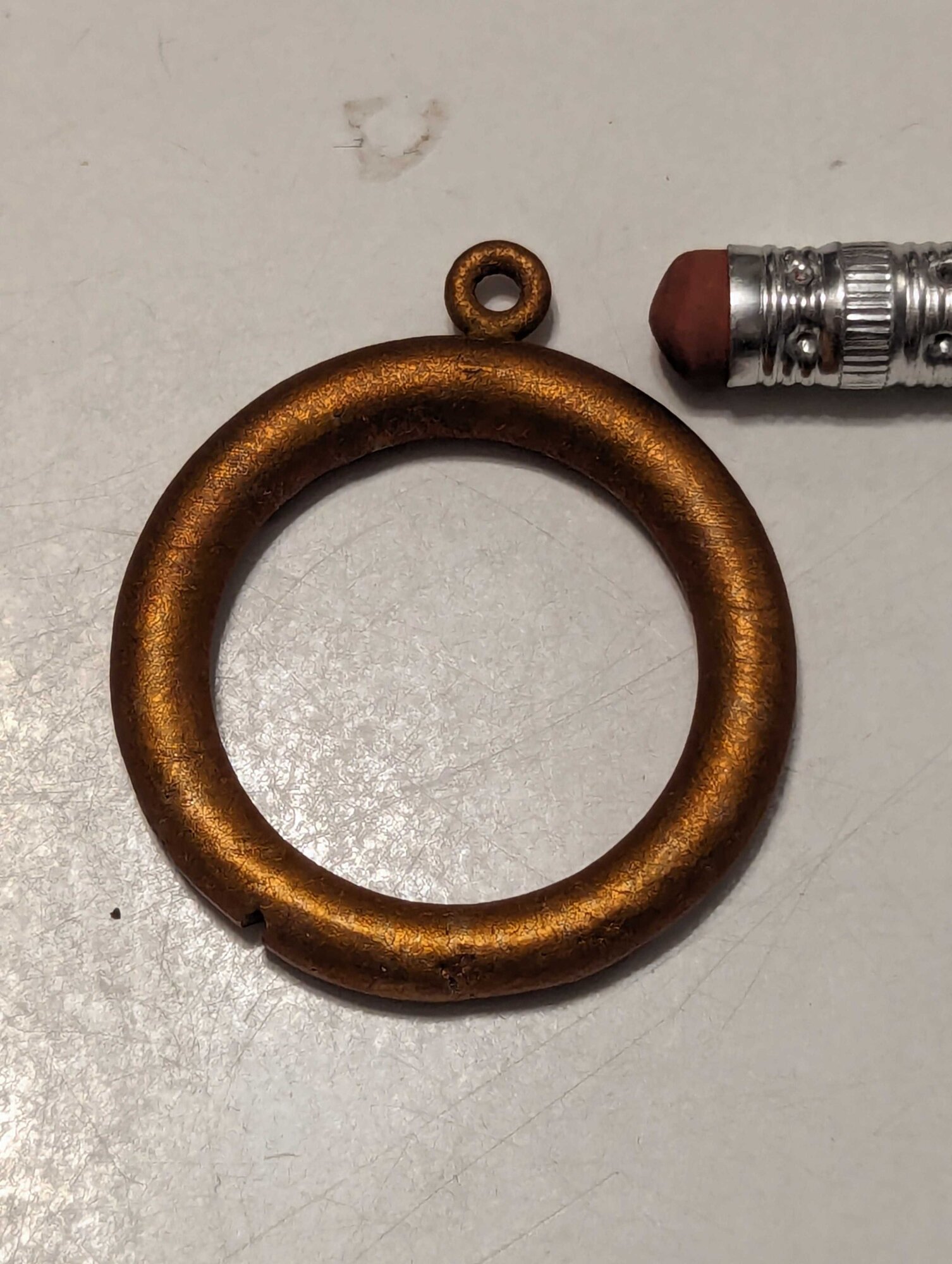
In the end, though, I decided I liked the look of powder coating for this particular project better.
Casting
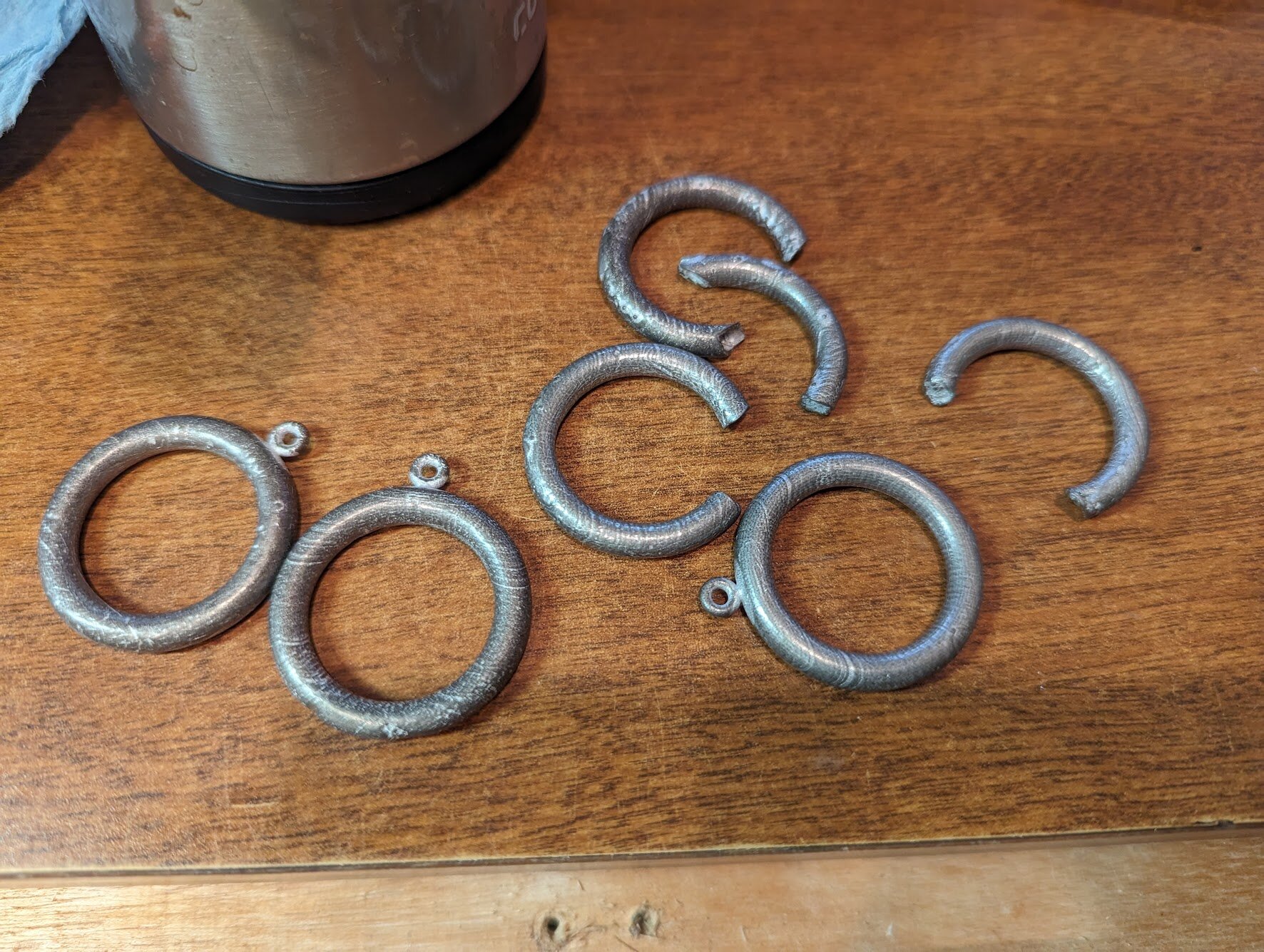
On May 12 I got this result from another pour. I'm honestly surprised it worked even a little. I think the key was letting the aluminum get just a bit hotter before pouring. Patience is not always my strong suit, but for once I had a bit. Luckily these mistakes are highly recyclable, but I do lose a day.
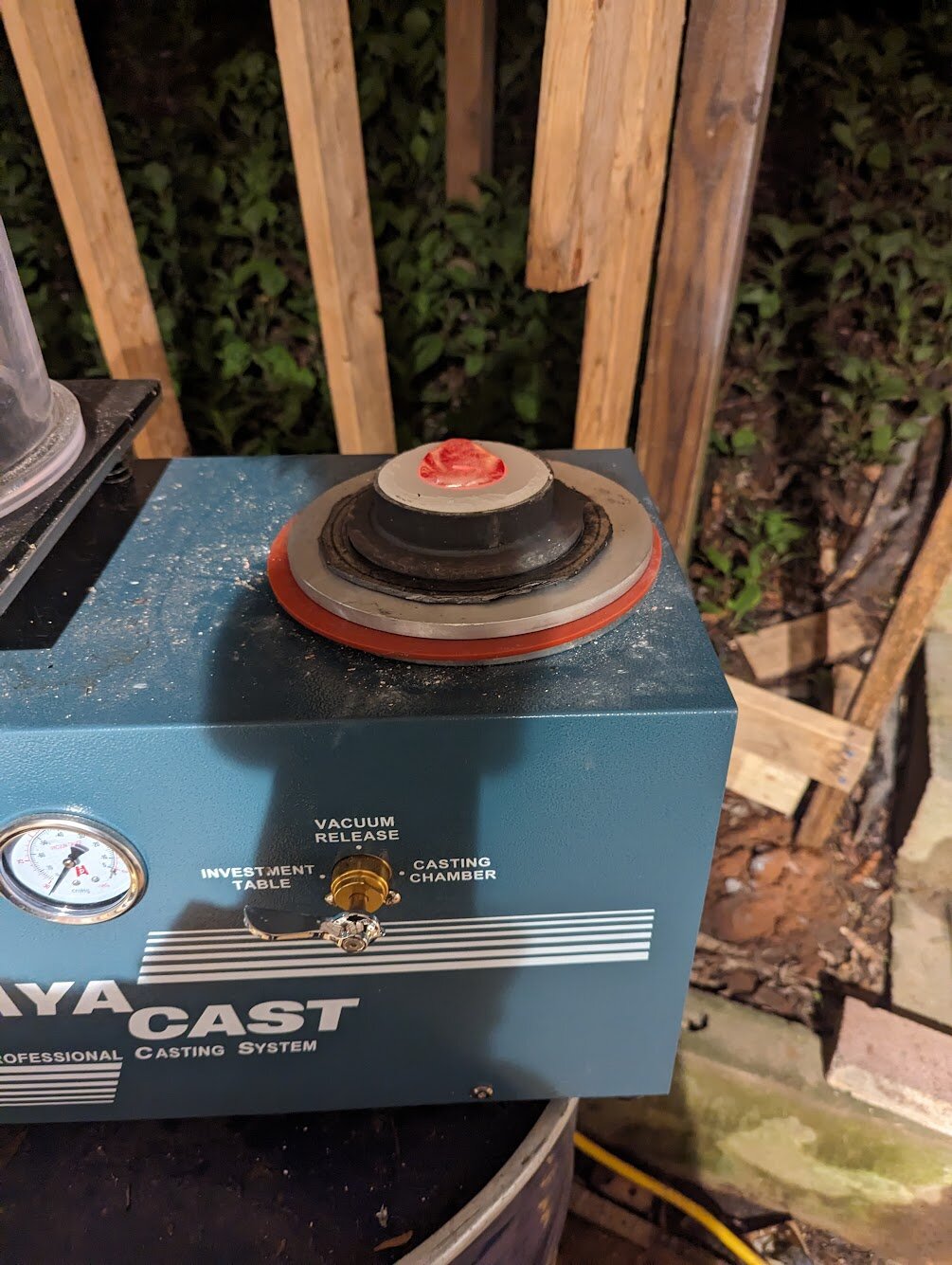
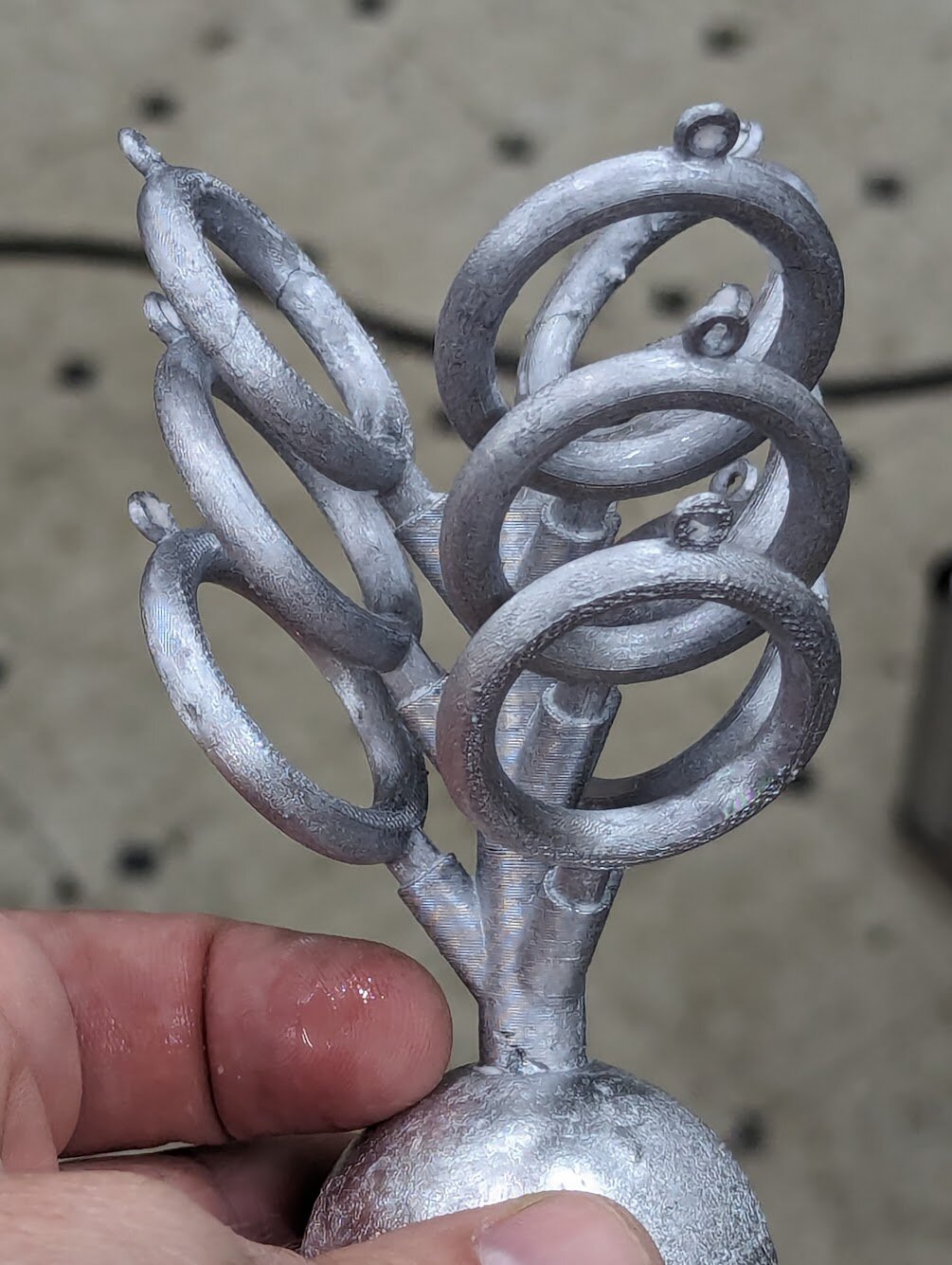
Finally, on the night of May 16, I got a good casting. This project had so far beaten me at every turn: printer problems, mold-making problems, casting problems. Here's the flask, glowing red hot, on the vacuum casting machine.
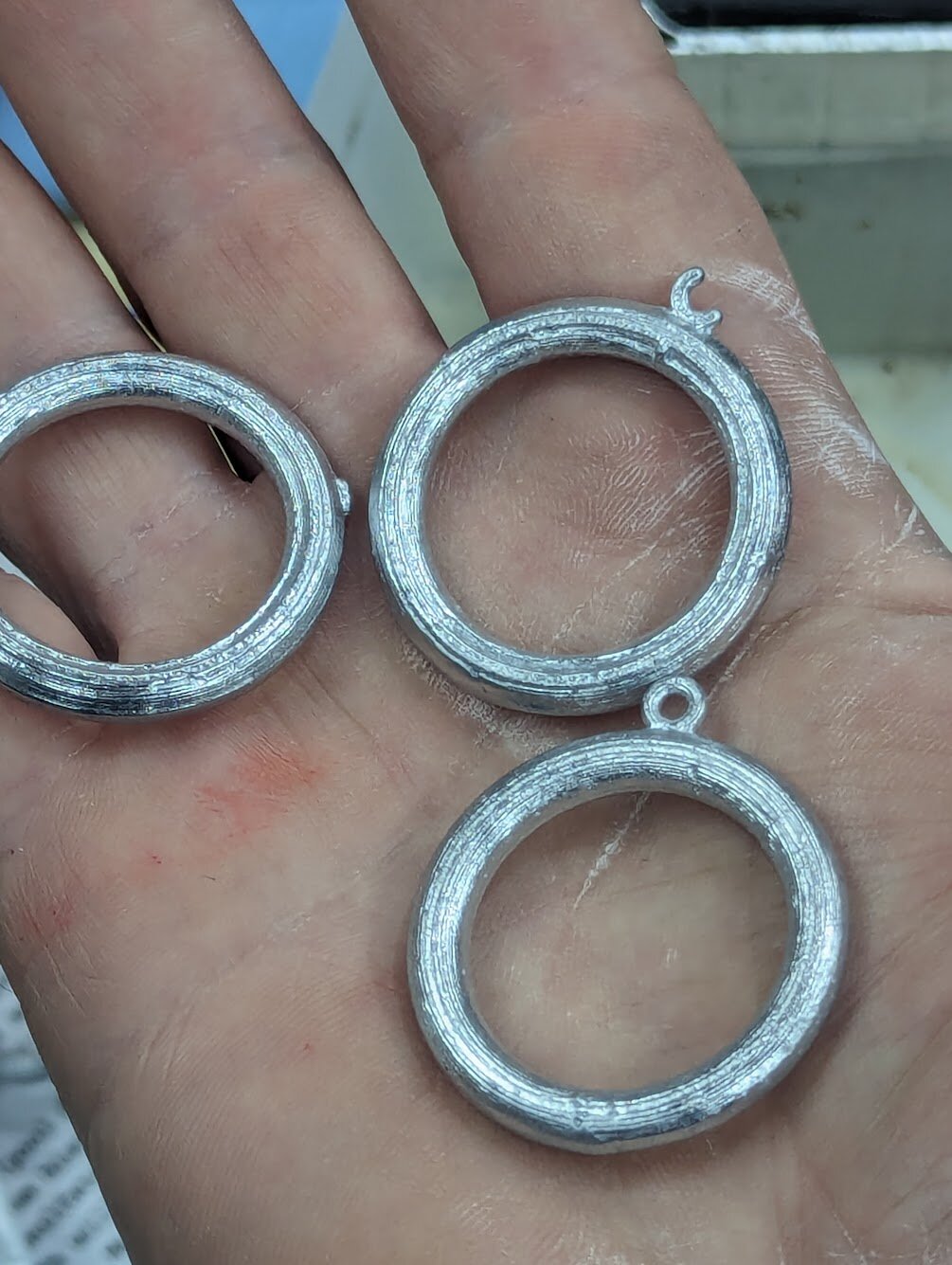
And the casting tree, still on the pour cup. Only thing left was to clean them up and powder coat them. I had one extra.
Delft clay
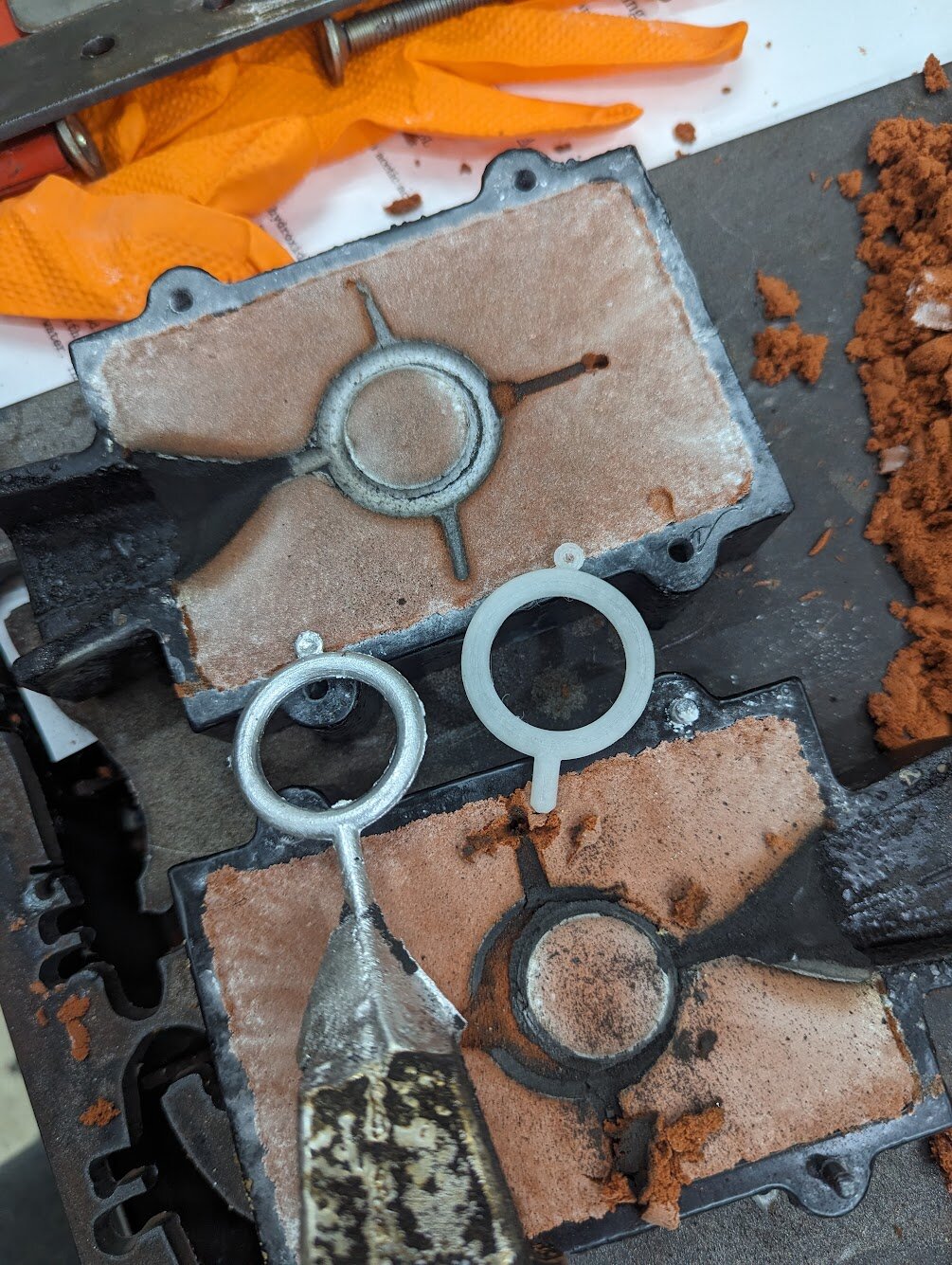
I also tried out some Delft clay, at the recommendation of someone at the makerspace, and got good results. It's like sand casting with something like Petrobond, but you press the pattern into the clay instead. I was amazed by the detail, and it doesn't consume the pattern the way lost PLA does. The turnaround is way faster, and it requires about $1200 less in equipment. The detail isn't quite as good as with a vacuum table, but that's a classic cost/quality/speed tradeoff.
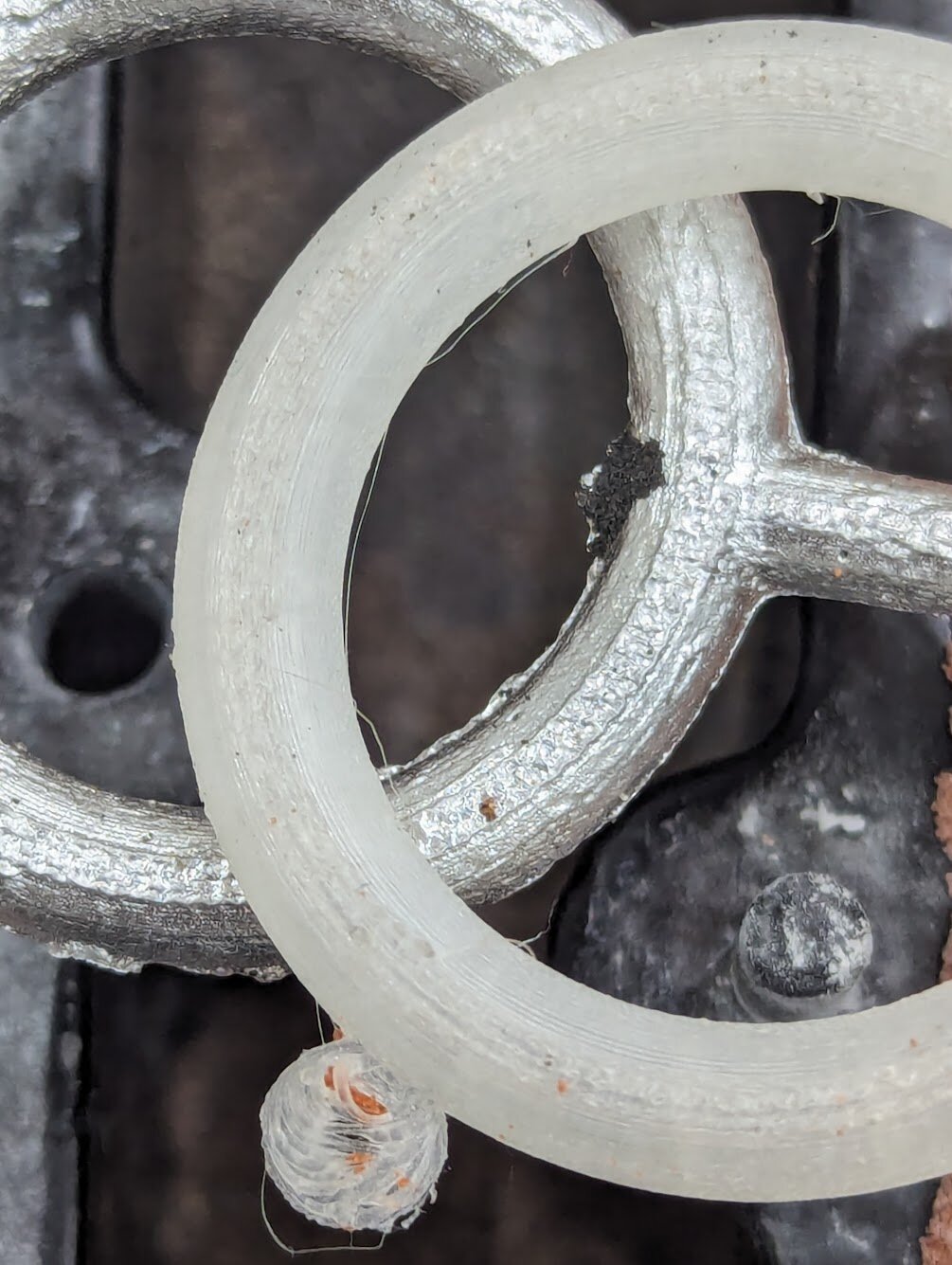
Here's a close-up of the printed pattern lying over the cast ring still in the clay, showing the surface detail.
The final product
here's the finished keychain, presented to the seniors at the wrap-up banquet on May 19.