A friend of mine had some woodworking squares that, well, weren't. He sent them to me, and sure enough, they were way, way out of square. Woodworking tools don't need to be as accurate as machining tools, but I had just gotten the surface grinder, so I thought I would see how far I could take it.
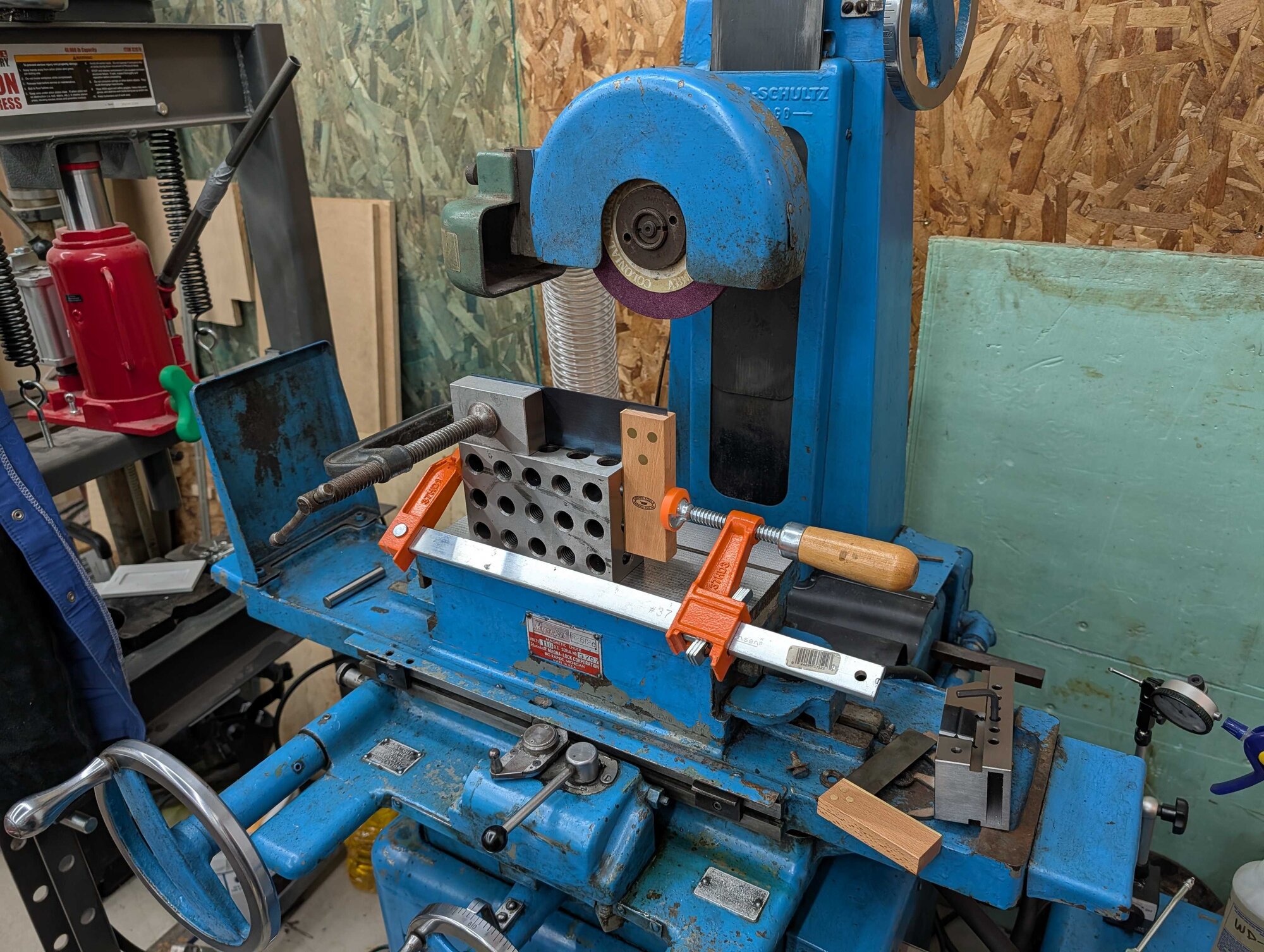
The outside metal edge was easy enough. I just clamped the inside reference face to a 2-4-6 block and ran the grinder along the edge. I clamped a 1-2-3 block to the blade for some additional stability.
I have to admit I was a bit curious about just how square those 2-4-6 blocks were, since they weren't particularly expensive. So out came the surface plate, the cylinder square, and the tenths indicator.
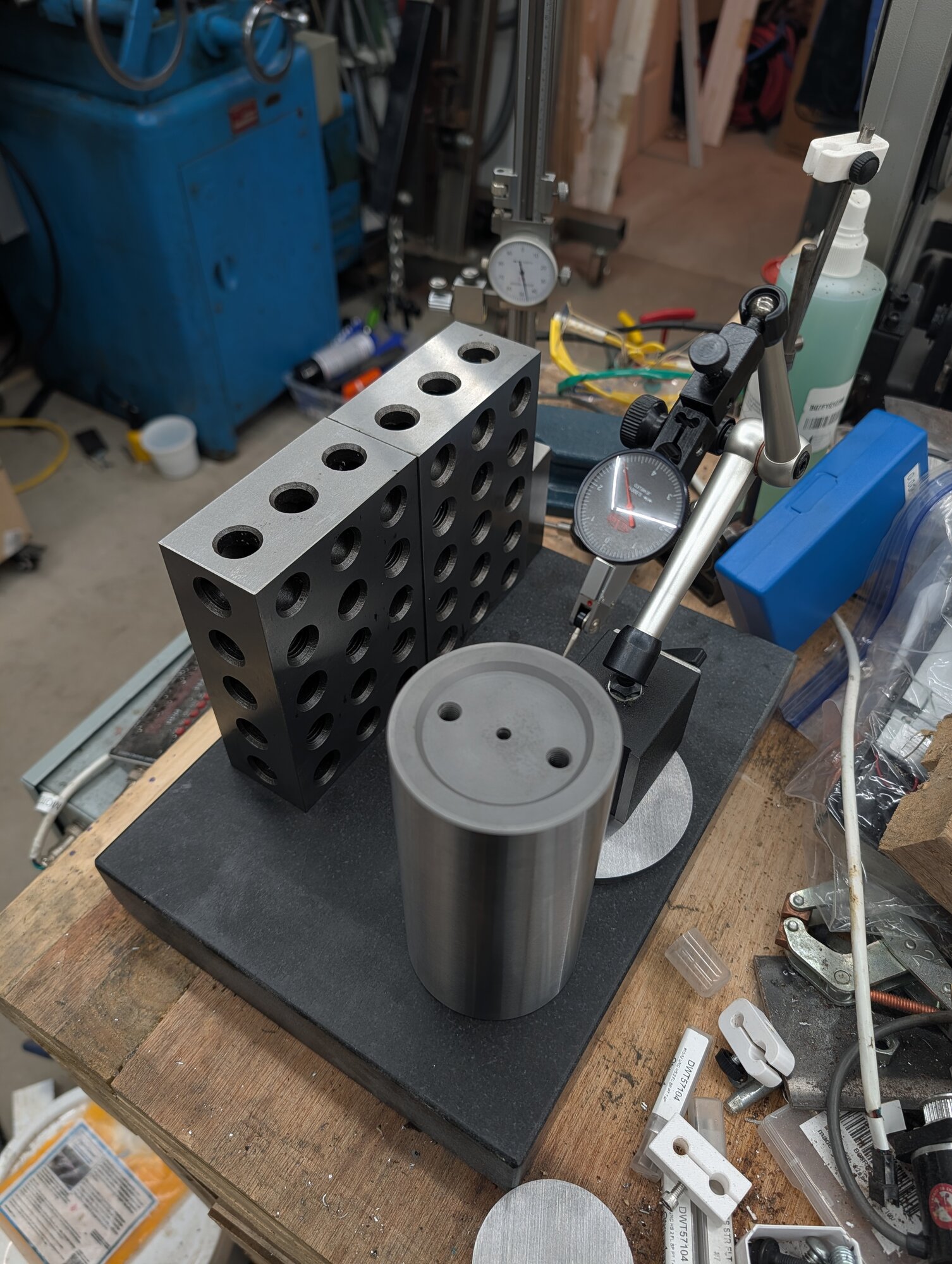 I wasn't particularly surprised to discover that the blocks were out by a fair amount - around 0.002" if I remember correctly. Not great by machining standards, but I decided to ignore it for this project.
The inside edge of the square was harder. The surface grinder doesn't have enough clearance to reach past the blade when it is flipped around, and I don't have a cup wheel for it. I decided to run it on the mill instead.
Here's what that looks like in action, with the cup wheel taking light passes along the edge:
It's not awesome to run abrasive stuff on the mill, since the grit can get into the ways and speed up wear. I covered the ways as best I could, but hopefully this isn't something I'll do very often. I should just get a cup wheel for the surface grinder.
The squares have already gone back to my friend, and he reports them as "more than accurate enough for anything I'll ever use them for". Nice.